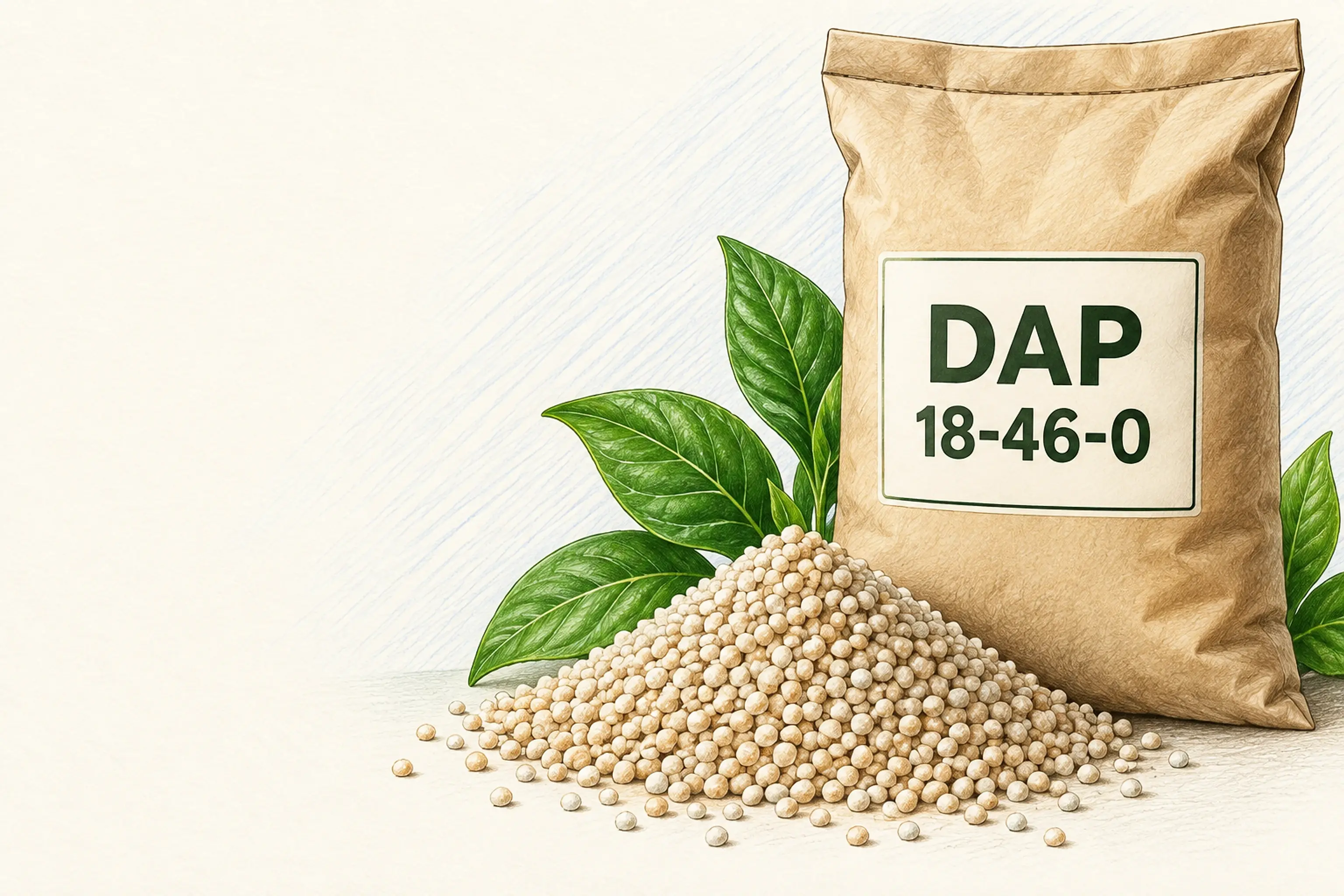
In many cereal systems the fertilizer programme follows a familiar pattern: a basal dose of diammonium phosphate (DAP, 18-46-0) at or before sowing or transplanting, followed by one or more nitrogen top-dressings, usually urea. The pattern is not a habit; it follows directly from how phosphorus and nitrogen behave in soil and when cereals need them.
Why phosphorus goes in at the start
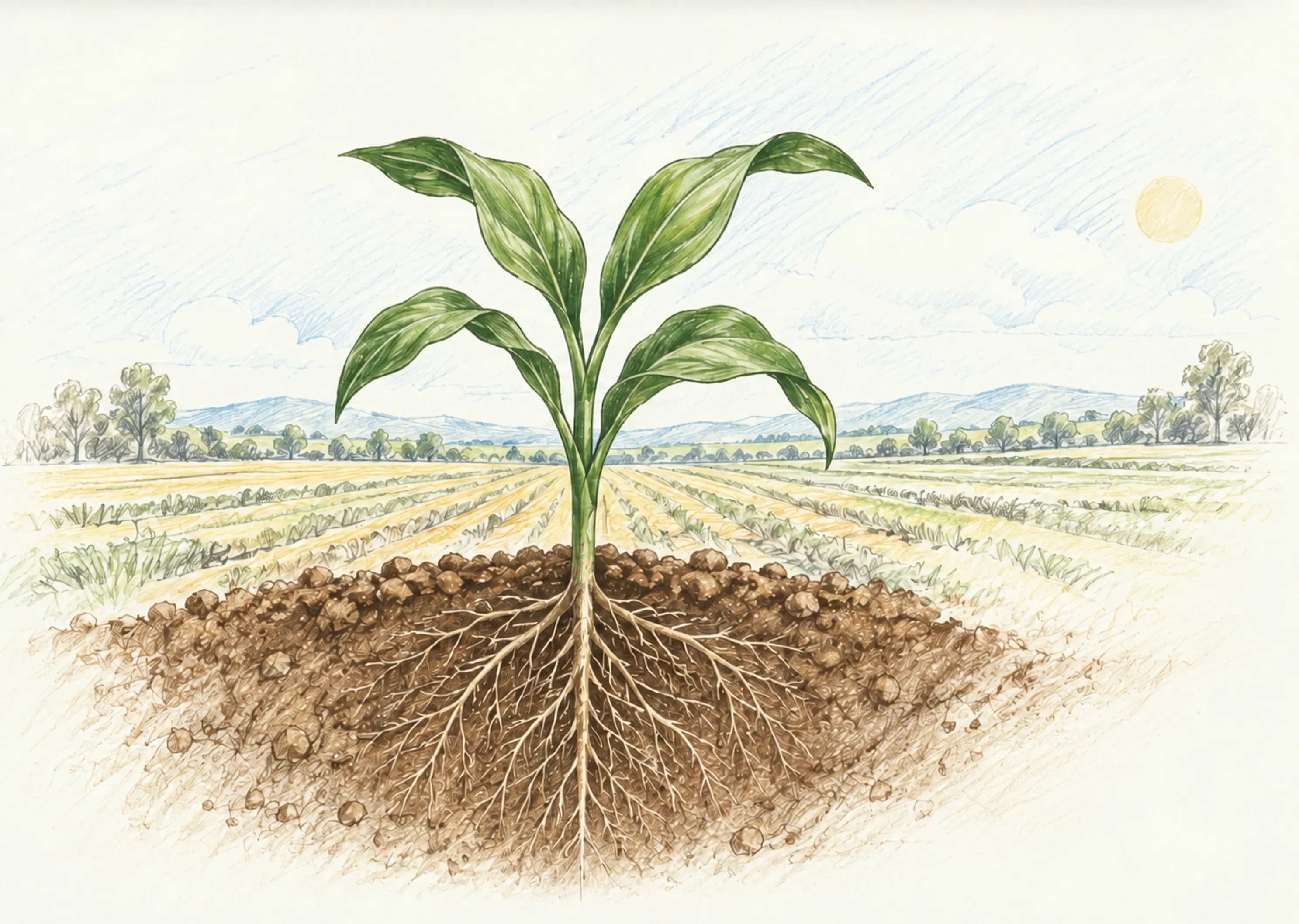
Phosphorus moves only a few millimetres in most soils, so it has to be placed where roots will grow rather than applied on the surface later in the season. Young cereal plants also need a good phosphorus supply early, when root systems are small and tillers are being formed. A shortage at this stage is difficult to correct afterwards. Applying DAP as a basal dose meets both needs.
DAP brings 18 kg of nitrogen with every 100 kg of product, which helps early growth. In most cereal programmes, however, that is only a modest share of the season's total nitrogen. The remainder is applied later, when the crop's demand rises.
Wheat
In wheat, DAP is typically drilled at sowing, ideally in a band to the side of and below the seed rather than in direct contact with it. DAP releases ammonia as it dissolves, and placing it with the seed can reduce emergence, especially on dry or alkaline soils. Where equipment only allows seed-row placement, rates should be kept conservative. Nitrogen beyond what DAP supplies is then top-dressed as urea, often split between early tillering and the start of stem elongation.
Transplanted and direct-seeded rice
For flooded rice, phosphorus is generally applied as a basal dose and incorporated into the soil during final puddling or levelling, before transplanting. Incorporation puts it in the reduced soil layer where roots develop and avoids leaving it in floodwater. Nitrogen is a different story: the rice nutrient management guidance from the International Rice Research Institute stresses matching nitrogen to crop demand, with topdressings around active tillering and panicle initiation rather than large early doses. DAP's nitrogen therefore counts toward the early requirement, and urea covers the later splits.
Maize
Maize responds well to starter phosphorus, particularly in cool soils at planting when root activity is slow. DAP is commonly placed in a band beside and below the seed row at planting (a two-by-two placement is a widely used pattern), or broadcast and incorporated before planting. As with wheat, direct contact between DAP and seed is avoided. The main nitrogen dose is usually side-dressed later as urea, typically before the crop reaches the rapid-growth stages.
| Crop | Typical DAP timing | Preferred placement | Main nitrogen source later |
|---|---|---|---|
| Wheat | At sowing | Side or below seed; limited seed-row rates | Urea at tillering and stem elongation |
| Rice (transplanted) | Before transplanting | Incorporated during final puddling | Urea at tillering and panicle initiation |
| Maize | At or just before planting | Band beside and below seed | Urea side-dress in early vegetative stages |
Common mistakes
- Top-dressing DAP onto a standing crop. Phosphorus left on the surface stays there and is largely unavailable, especially in dry conditions.
- Forgetting DAP's nitrogen. Ignoring the 18 percent nitrogen leads to over-application at the start of the season.
- Using DAP alone for the season's nitrogen. Raising DAP rates to cover nitrogen needs over-supplies phosphorus and is an expensive way to buy nitrogen.
- Skipping soil tests. Phosphorus rates should reflect soil test levels; soils with high residual phosphorus need less.
Planning the purchase
Because DAP is applied in a short window at sowing, availability before the season matters more than for in-season products. Distributors usually pair DAP 18-46-0 with agriculture-grade urea orders to cover the full programme. When enquiring, state quantities for each product, packing (50 kg bags, jumbo bags or bulk), required arrival date and the documents you need. Nuroil provides a certificate of analysis with each delivery and certificates of origin and inspection on request.