
Technical document

· PDF

Tell us who you are and the document downloads straight away. We use these details only to follow up on your requirement.

Samples & documents

What can we send you?

Tick what you need
Request a quote
Guide3 min read5 sections

Knowledge centre · Urea & fertilizers

DAP 18-46-0 specification parameters and typical contract limits

Parameter-by-parameter reference for DAP 18-46-0: nitrogen, phosphate solubility, moisture, granule size and common contract limits.

Written by the Nuroil trade desk, Sharjah

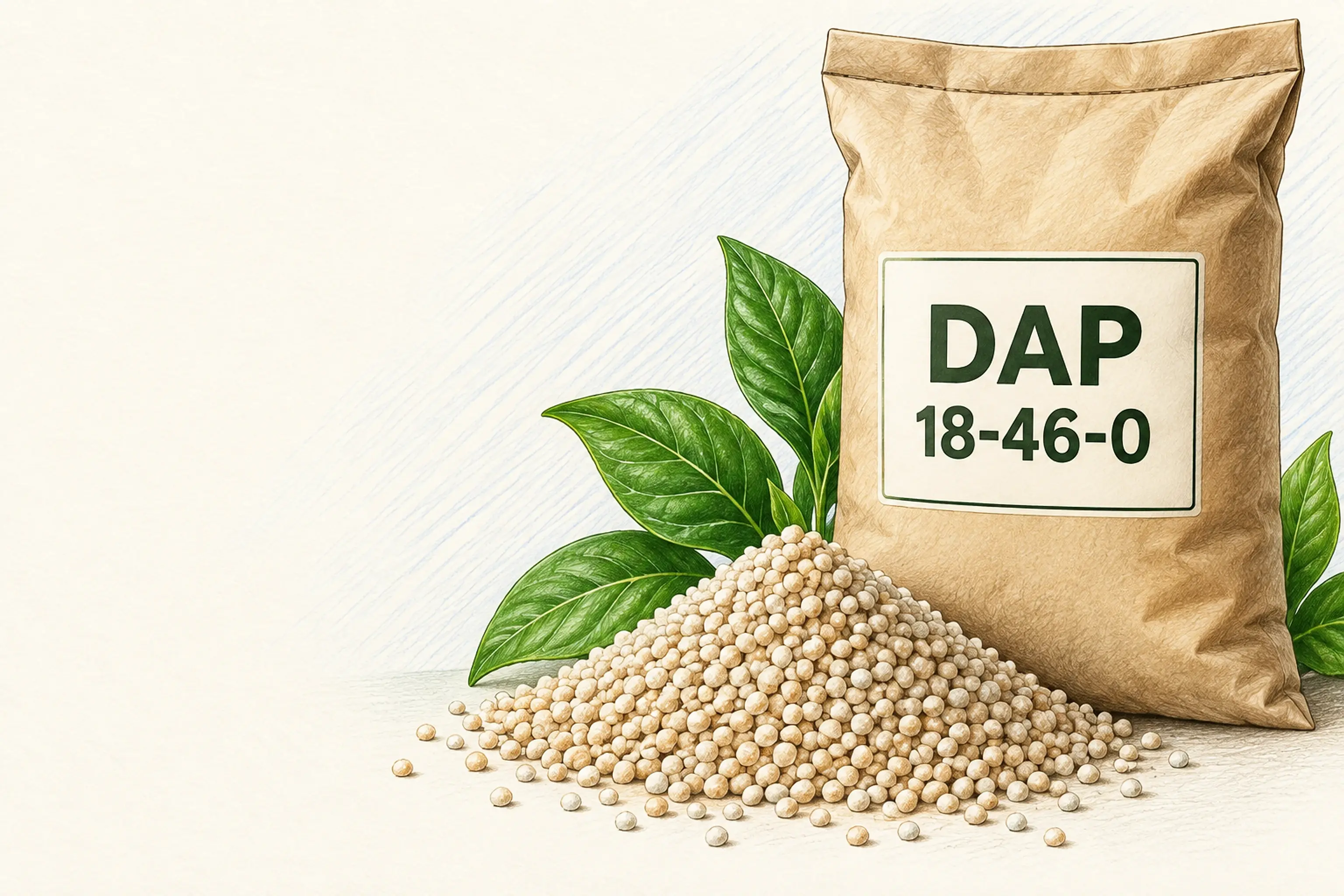
Illustration of a DAP 18-46-0 fertilizer sack and granules
On this page · 5 sections
  1. 01Nutrient content
  2. 02Physical properties
  3. 03Other things a specification may include
  4. 04Reading results against the specification
  5. 05Turning this into an enquiry

Diammonium phosphate is traded worldwide under the shorthand 18-46-0, meaning a minimum of 18 percent nitrogen and 46 percent phosphate (expressed as P₂O₅) with no potash. Behind that shorthand sits a short list of parameters that decide whether a cargo performs in the field and in spreading or blending equipment. This guide sets out what each one means for DAP specifically and the kind of limits buyers usually write into a contract.

Nutrient content

01

Total nitrogen (N), 18 percent minimum

All of DAP's nitrogen is in ammonium form. Some national standards also state a minimum for ammoniacal nitrogen separately; for genuine DAP the two figures are close.
02

Total phosphate (P2O5), 46 percent minimum

This equals about 20 percent elemental phosphorus. Products that fall below the standard grade should not be sold as DAP; some producers market lower-analysis ammonium phosphates under different names.
03

Water-soluble P2O5

Not all of the phosphate in a granule dissolves in water; a share is present as compounds soluble only in neutral ammonium citrate. Water-soluble phosphate is the most readily available portion, so many standards set a separate minimum. Published specifications commonly put this around 39 to 41 percent, depending on the standard. A buyer should specify which figure and method apply.

Physical properties

01

Moisture

Typical limits range from 1.5 to 2.5 percent maximum. Higher moisture increases the tendency to cake in storage and can weaken granules.
02

Granule size

Most contracts specify that at least 90 percent of the product falls within 2 to 4 mm; some standards use a wider 1 to 4 mm band. Size uniformity matters for even spreading and for blending with urea or potash of similar size, because poorly matched sizes segregate.
03

Crushing strength and dust

Not every standard sets a figure, but buyers handling bulk cargoes often add a minimum crushing strength and a maximum fines content (material below 1 mm) to limit dust and breakage during grabbing, conveying and bagging.
04

Colour

DAP ranges from grey or light brown to dark brown or black, depending on the phosphate rock used and any anti-caking coating. Colour is not a quality parameter in itself, though a buyer may specify it for market reasons.
ParameterTypical contract basisWhy it matters
Total N18.0% minNutrient value, label claim
Total P₂O₅46.0% minNutrient value, label claim
Water-soluble P₂O₅Around 39 to 41% min (per standard)Readily available phosphate
Moisture1.5 to 2.5% maxCaking, granule strength
Granule size90% min within 2 to 4 mm (or 1 to 4 mm)Spreading, blending, segregation
Fines / dustAgreed max, if specifiedHandling losses, dust exposure
Crushing strengthAgreed min, if specifiedBreakage in bulk handling

Other things a specification may include

  • Anti-caking coating. Usually an oil or amine-based conditioner applied at the plant. Buyers may state whether a coating is required.
  • Heavy metals. Some importing markets regulate cadmium and other elements in phosphate fertilizers. If your market has such limits, they belong in the contract.
  • Free acidity or pH. Occasionally stated to confirm the product is properly ammoniated.
  • Packing and marking. Bag type, net weight, liner, printing and pallet requirements.

Reading results against the specification

Nutrient results from different laboratories can vary slightly, and sampling technique has a large effect on results for granular products. Contracts should name the analytical standard, the sampling method, where the sample is taken (load port or discharge) and whose results are final. Tolerances on minimum guarantees should be agreed in advance rather than discussed after a result arrives.

Turning this into an enquiry

When asking for DAP 18-46-0, list the minimum N and total P₂O₅, your water-soluble P₂O₅ requirement and method, moisture and size limits, any heavy-metal limits for your market, packing and destination. Nuroil supplies a certificate of analysis with every delivery and can arrange certificate of origin, MSDS and third-party inspection on request. Use the quote form to share your specification.
PRODUCTS IN THIS GUIDE
KEEP READING

More from the Knowledge Centre.

STILL HAVE A QUESTION?

Ask the people who trade it every day.

Our trade managers answer technical and commercial questions about grades, specifications, packing and shipping.

LET’S TALK ABOUT YOUR REQUIREMENTS

Your next shipment starts here.

Request a quote