Crop nitrogen recommendations are almost always stated as kilograms of nitrogen (N) per hectare, while farmers and distributors buy kilograms or bags of product. For agriculture-grade urea, with 46 percent nitrogen, the conversion is straightforward. Errors usually come from forgetting nitrogen supplied by other products, mixing area units or overlooking how the dose is split. This guide brings the steps together.
The basic conversion
- Urea (kg) = N required (kg) ÷ 0.46
- N supplied (kg) = urea (kg) × 0.46
Put simply, each kilogram of nitrogen needs about 2.17 kg of urea, and each 50 kg bag of urea supplies 23 kg of nitrogen.
Quick reference
| N required (kg/ha) | Urea (kg/ha) | 50 kg bags per ha |
|---|---|---|
| 23 | 50 | 1.0 |
| 40 | 87 | 1.7 |
| 60 | 130 | 2.6 |
| 80 | 174 | 3.5 |
| 100 | 217 | 4.3 |
| 120 | 261 | 5.2 |
| 150 | 326 | 6.5 |
| 200 | 435 | 8.7 |
Figures are rounded. For recommendations per acre, note that one hectare is about 2.47 acres.
Credit other nitrogen sources first
Urea normally supplies the balance of a crop's nitrogen after other sources have been counted. Common credits include:
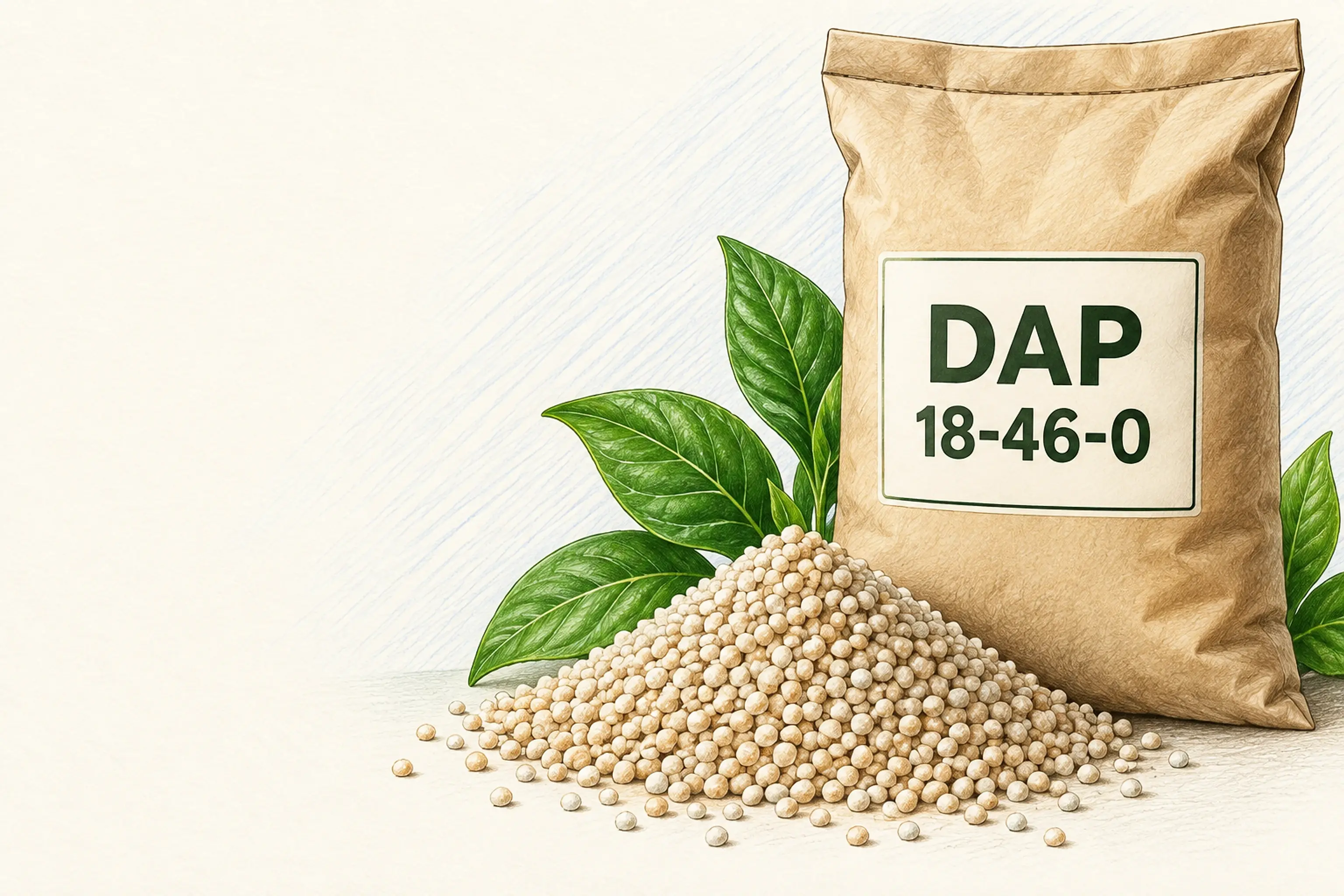
- Phosphate fertilizers. DAP (18-46-0) supplies 18 kg N per 100 kg; MAP supplies around 11 kg.
- Compound fertilizers. The first number in an NPK grade is the nitrogen percentage.
- Manure and compost. Only part of their nitrogen becomes available in the first season; local advisory figures should be used.
- Previous crops and soil tests. Legume residues and soil nitrate tests may reduce the requirement, depending on local recommendation systems.
Example: a maize crop needs 180 kg N/ha. A basal dose of 150 kg/ha DAP supplies 27 kg N. The balance is 153 kg N, which requires 153 ÷ 0.46 = 333 kg urea per hectare.
Split the dose sensibly
The calculated urea rate is rarely applied in one go. Typical splits are:
- Wheat: a smaller dose at tillering and the larger share at the start of stem elongation, sometimes with a third dose before booting.
- Rice: a modest basal dose incorporated into the soil, then topdressings around active tillering and panicle initiation, avoiding very large single topdressings.
- Maize: a portion at planting and a side-dress in the early vegetative stages.
Each split is calculated the same way: the nitrogen for that application divided by 0.46.
Seed-row limits
A calculated basal dose may exceed what can safely be placed with seed. Urea in the seed row forms ammonia that harms germination. Provincial guidance from Western Canada sets seed-placed urea limits for cereals that range from nothing on sandy soils with narrow openers and wide rows up to a few tens of kilograms of nitrogen per hectare on heavier soils with wider spread, and recommends halving them in dry seedbeds. Nitrogen above those limits should be banded away from the seed or top-dressed.
Allowing for losses in the plan
Recommendations generally assume reasonable management. Where urea will be broadcast onto the surface in warm weather without rain or irrigation to wash it in, part of its nitrogen can be lost as ammonia. The better response is usually to change timing or placement, or to use urea treated with a urease inhibitor, rather than simply raising the rate. Raising rates adds cost and increases the nitrogen at risk of loss.
From hectares to tonnes
- Calculate urea per hectare for each crop after credits.
- Multiply by the planted area for each crop.
- Add an allowance for handling losses and buffer stock.
- Round to the packing unit: 50 kg bags, 1 tonne jumbo bags or bulk.
- Schedule arrivals to fall before the first application window.
Placing the order
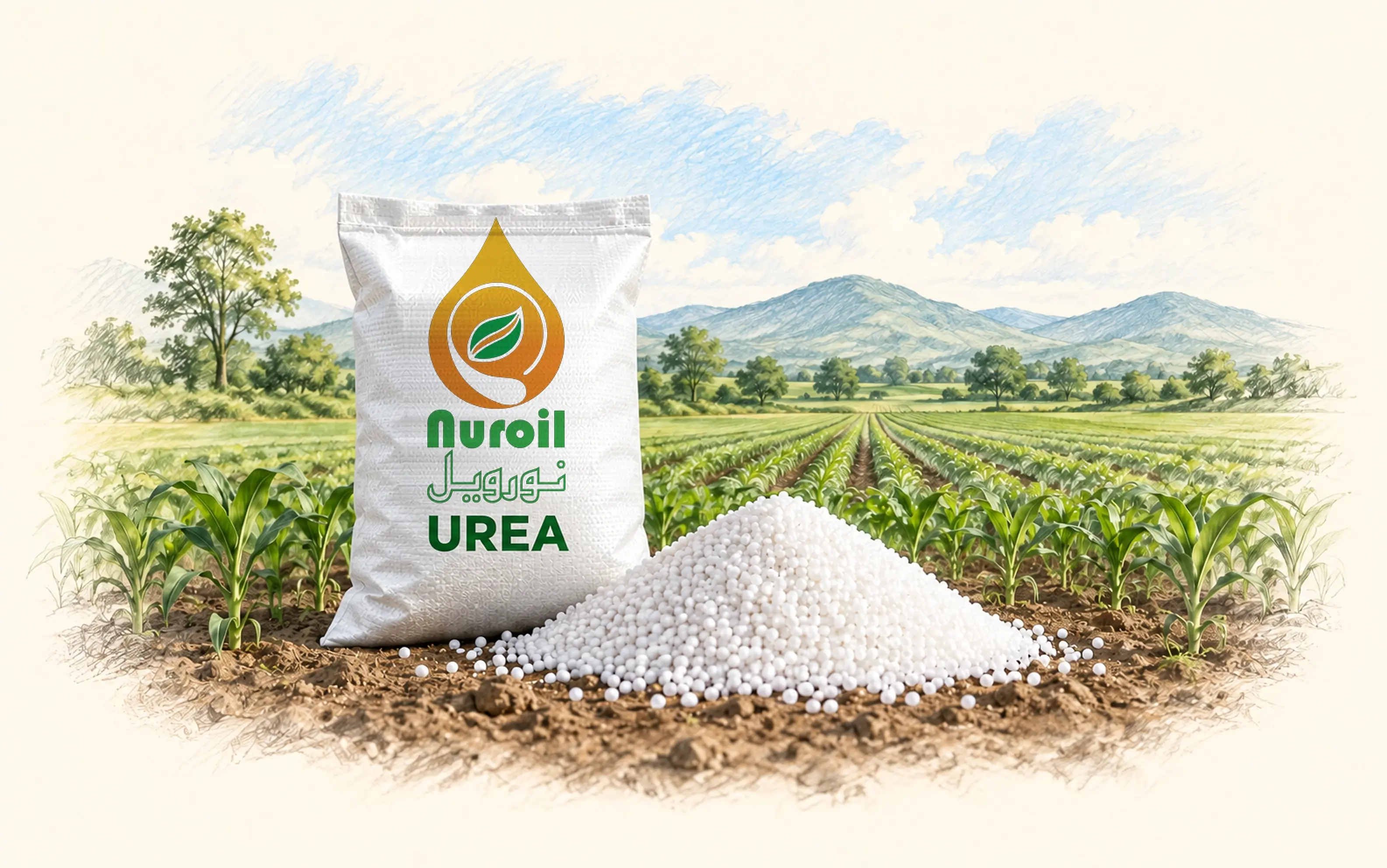
With tonnages calculated, an enquiry for agriculture-grade urea should state the quantity, prilled or granular, size range, packing, destination and arrival window. If DAP is part of the same programme, quoting both together simplifies logistics. Nuroil provides a certificate of analysis with every delivery; use the quote form to send your requirements.