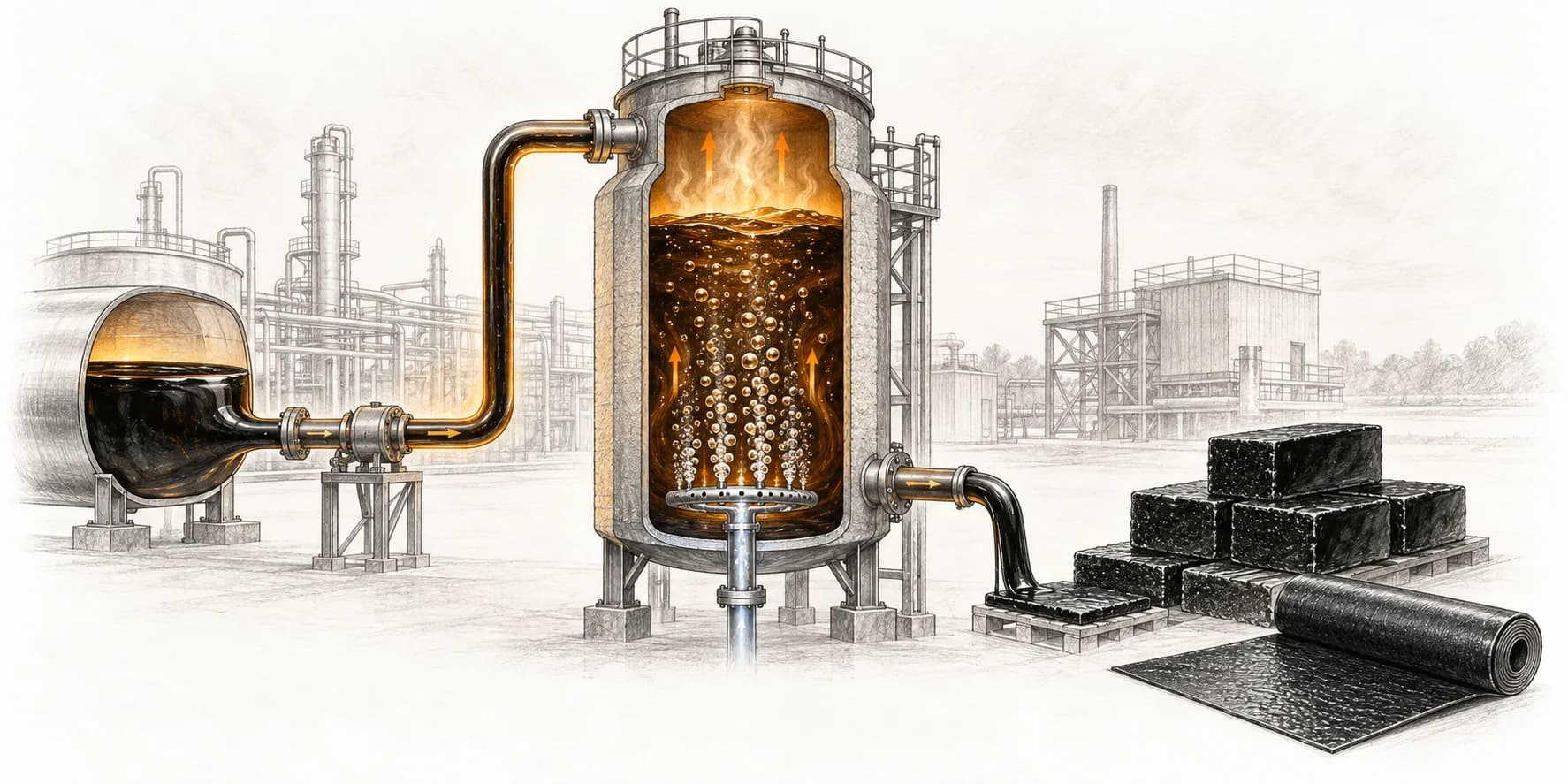
Buried and submerged steel pipe corrodes unless it is separated from the soil and water around it. Hot-applied bitumen enamel is one of the long-established ways of doing that. It uses an oxidised bitumen, often blended with mineral filler, melted and flooded onto the pipe with reinforcing wraps embedded in it. The result is a thick, waterproof, electrically insulating coat that works together with cathodic protection.
Why oxidised rather than paving bitumen
Paving bitumen softens at temperatures a buried pipe or a pipe stacked in the sun can easily reach, and it would sag and flow off the steel. Air blowing raises the softening point well above the service temperature while keeping enough flexibility for the coated pipe to be handled, bent slightly and backfilled. Oxidised bitumen also adheres well to a primed steel surface and is highly resistant to water.
The layers in a typical system
The conventional bitumen enamel system, described in patent literature going back decades and still reflected in factory practice, is built up in sequence:
- Surface preparation. The steel is cleaned, typically by blast cleaning, to remove mill scale, rust and contamination.
- Primer. A thin primer is applied and allowed to dry so that the hot enamel bonds to the steel.
- Hot enamel. The melted bitumen enamel is flooded onto the rotating pipe.
- Inner wrap. A glass fibre mat is pulled into the hot enamel so that it is embedded in the coat and reinforces it.
- Outer wrap. A further wrap, such as coated glass fabric or kraft paper, protects the enamel from mechanical damage and sunlight during storage and laying.
The number of enamel and wrap layers, and the coating thickness, depend on the specification and the severity of the service.
Temperature limits
The European standard for factory-applied bitumen pipe coatings, EN 10300, sets design temperature ranges by bitumen type:
| Bitumen type | Design temperature range |
|---|---|
| Oxidised bitumen | -15°C to +75°C |
| Polymer modified bitumen | -30°C to +90°C |
The limits reflect the two weaknesses of oxidised bitumen: it becomes brittle in the cold and will eventually soften with heat. Pipelines carrying hot product, or laid in very cold ground, may need modified bitumen or a different coating system altogether. The standard covers welded and seamless tubes and fittings for both onshore and offshore pipelines carrying liquids or gases.
Choosing the grade
Pipe coating calls for the harder, higher softening point end of the oxidised range. Points to weigh:
- Service and storage temperature. The softening point should sit comfortably above the highest temperature the pipe will see, including when stacked in the sun before laying. Grades such as 90/15 or 115/15 are often considered for this reason.
- Handling in cold weather. Harder grades are more prone to cracking if coated pipe is handled or bent in the cold, so the coating specification may limit handling temperatures.
- Compatibility. The enamel, primer and wraps are designed as a system; changing one component without checking the others can affect bond and performance.
A bitumen enamel coating is a system. The oxidised bitumen grade is chosen to suit the service temperature, the primer and the wraps, not on its own.
Kettle practice
Oxidised bitumen is a poor conductor of heat, so melting must be steady and controlled. Breaking blocks into smaller pieces helps even heating, and the product's maximum safe handling temperature should never be exceeded, because overheating can crack the bitumen, release low-flash vapours and change its properties. Water must be kept out of hot kettles to avoid violent frothing. Follow the SDS and the coating specification for temperatures and protective equipment.
What to specify when buying
State the grade, the specification the coating must meet, the expected service temperature range, and whether you need straight oxidised bitumen or a filled enamel. Ask for a certificate of analysis showing softening point, penetration and any other properties your coating specification lists, plus the SDS. Nuroil supplies oxidised bitumen in bags, drums or other packing with a CoA for every delivery, and third-party inspection on request; contact us through the quote form.