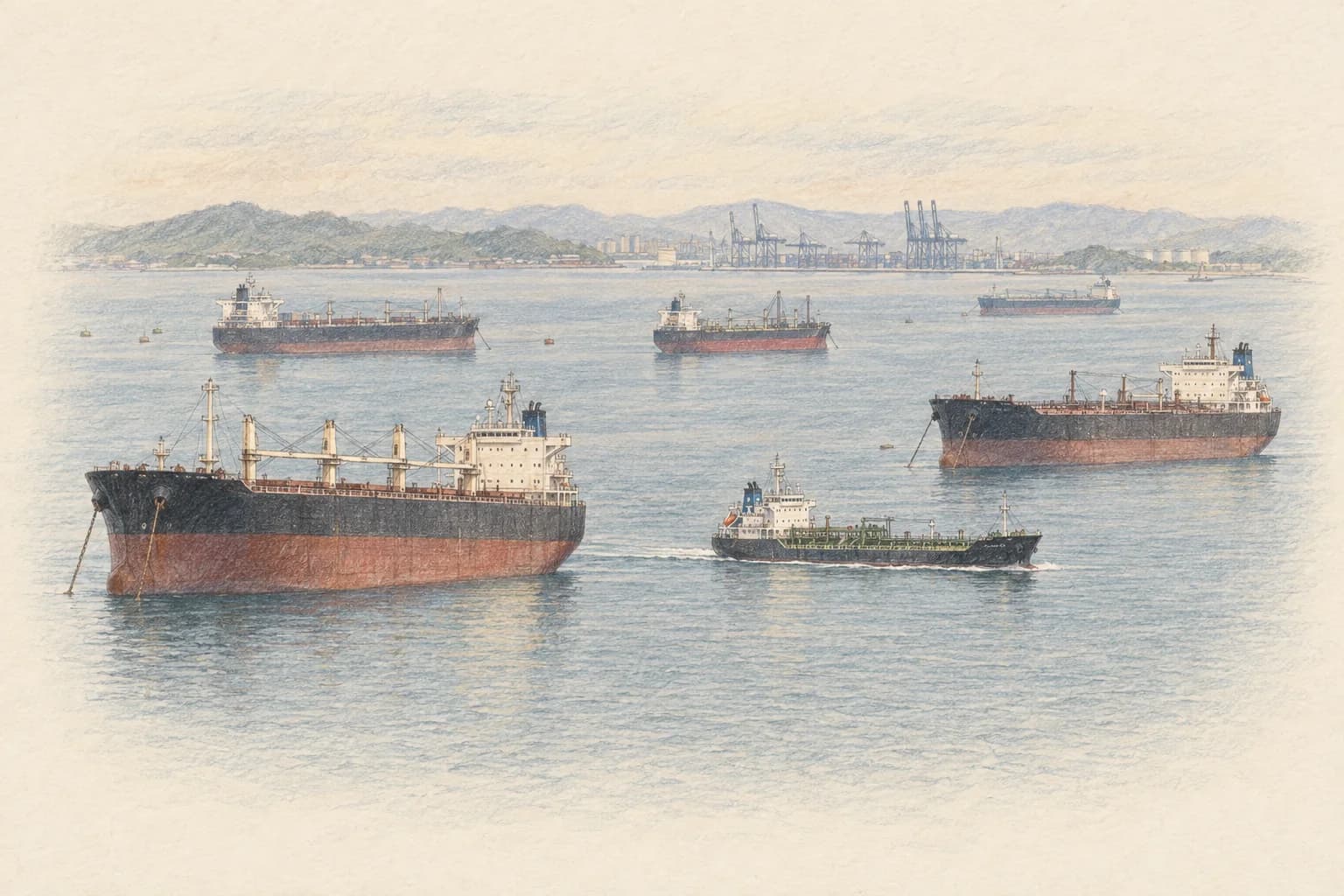
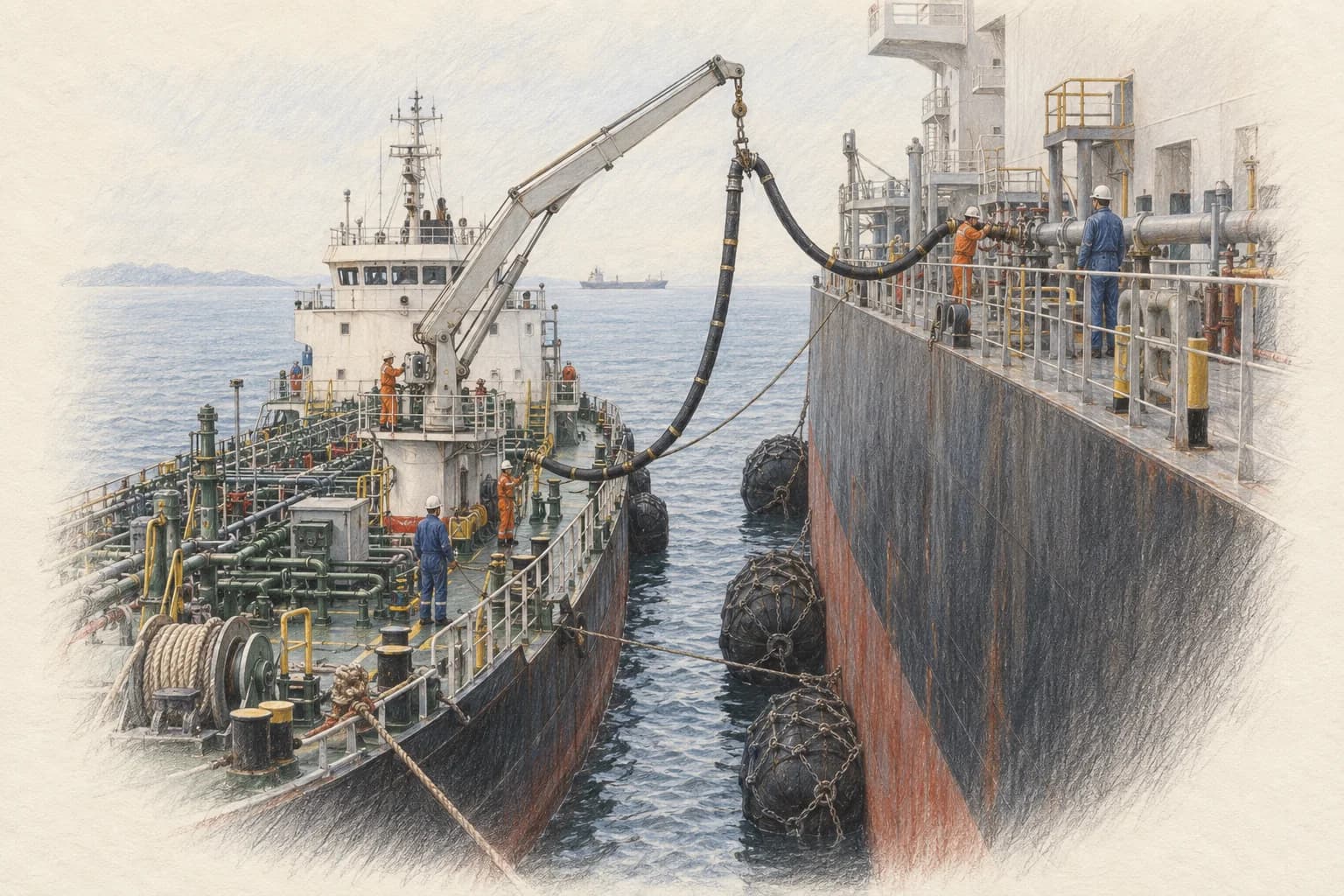
ISO 8217 is the international standard that sets requirements for fuels used in marine diesel engines and boilers. Almost every bunker contract, and many industrial fuel oil contracts, refer to it. Knowing what each parameter controls makes it easier to read a certificate of analysis and to spot a problem before it reaches the engine.
How the standard is organised
ISO 8217 covers two families of fuel: distillates (DM grades such as DMA) and residual fuels (RM grades). Residual grades are named by a category letter and their maximum kinematic viscosity at 50°C, for example RME 180, RMG 380 or RMK 700. The categories differ mainly in density and in the limits for contaminants and residues.
The standard is revised from time to time, and the limits and test methods change between editions. The 2017 edition is still widely written into contracts, so every enquiry and contract should name the edition it refers to.
Sulphur is not given a fixed figure in the residual fuel table. Instead the standard refers to statutory requirements, which means the buyer states the sulphur limit needed for where the fuel will be used, such as 0.50% or 0.10%.
Key parameters for RMG 380
The table below shows limits for RMG 380 under ISO 8217:2017, the grade most commonly traded as IFO 380. Check the grade and edition in your own contract before relying on any figure.
| Parameter | RMG 380 limit | What it controls |
|---|---|---|
| Kinematic viscosity at 50°C | max 380 mm²/s | Heating needed for transfer and injection |
| Density at 15°C | max 991.0 kg/m³ | Separator performance and quantity calculation |
| CCAI | max 870 | Ignition quality in diesel engines |
| Sulphur | statutory requirements | SOx emissions and acid formation |
| Flash point | min 60°C | Fire safety in storage and handling |
| Hydrogen sulphide | max 2.00 mg/kg | Toxic gas risk to crew and handlers |
| Acid number | max 2.5 mg KOH/g | Corrosive acidic compounds |
| Total sediment, aged | max 0.10% m/m | Stability and sludge formation |
| Carbon residue, micro method | max 18.00% m/m | Deposits in combustion spaces |
| Pour point | max 30°C | Lowest practical handling temperature |
| Water | max 0.50% v/v | Lost energy, corrosion, poor combustion |
| Ash | max 0.100% m/m | Deposits and abrasive wear |
| Vanadium | max 350 mg/kg | High-temperature corrosion of exhaust valves |
| Sodium | max 100 mg/kg | Combines with vanadium to form corrosive deposits |
| Aluminium + silicon | max 60 mg/kg | Catalyst fines that cause abrasive wear |
| Used lubricating oil | fuel is considered to contain it if Ca > 30 and Zn > 15 mg/kg, or Ca > 30 and P > 15 mg/kg | Fuel should be free of used lubricating oil |
Parameters that protect the engine
Several limits exist mainly to protect machinery. Aluminium and silicon come from catalyst fines carried over from refinery cracking units. These hard particles cause rapid wear of fuel pumps, injectors, piston rings and liners if the separators do not remove them. Density matters because centrifugal separators rely on the difference in density between fuel and water. CCAI, calculated from density and viscosity, indicates how readily the fuel ignites, which matters most for medium- and high-speed engines.
Vanadium and sodium together form low-melting deposits on hot exhaust valves and turbocharger parts, which is why both are limited. Carbon residue and ash describe how much solid material the fuel leaves behind when it burns.
Parameters that protect people and storage
The flash point minimum of 60°C matches the general safety rule for fuel used in ships' machinery spaces. Hydrogen sulphide is limited because this toxic gas can accumulate in tank headspaces. Total sediment after ageing shows whether the fuel is likely to stay stable in storage or drop sludge, while pour point sets the temperature below which the fuel will not flow freely.
Reading a certificate against the standard
- Check the grade, edition and sulphur limit first; a fuel can meet RMG 380 and still breach your sulphur requirement.
- Compare viscosity with your heater capacity, not just with the 380 limit.
- Look at aluminium plus silicon alongside your separator performance, even when it is within the limit.
- Keep pour point in mind for cold-weather storage and unheated lines.
- Remember that the standard also requires fuel to be free from added substances that could harm safety, machinery or personnel.
Specifying ISO 8217 fuel in an enquiry
For fuel oil or marine fuel, state the grade, the ISO 8217 edition, the maximum sulphur content and any tighter limits you need on viscosity, cat fines or pour point. Nuroil supplies a certificate of analysis with every delivery and can arrange third-party inspection on request, so each parameter in the table can be checked against your contract before shipment.