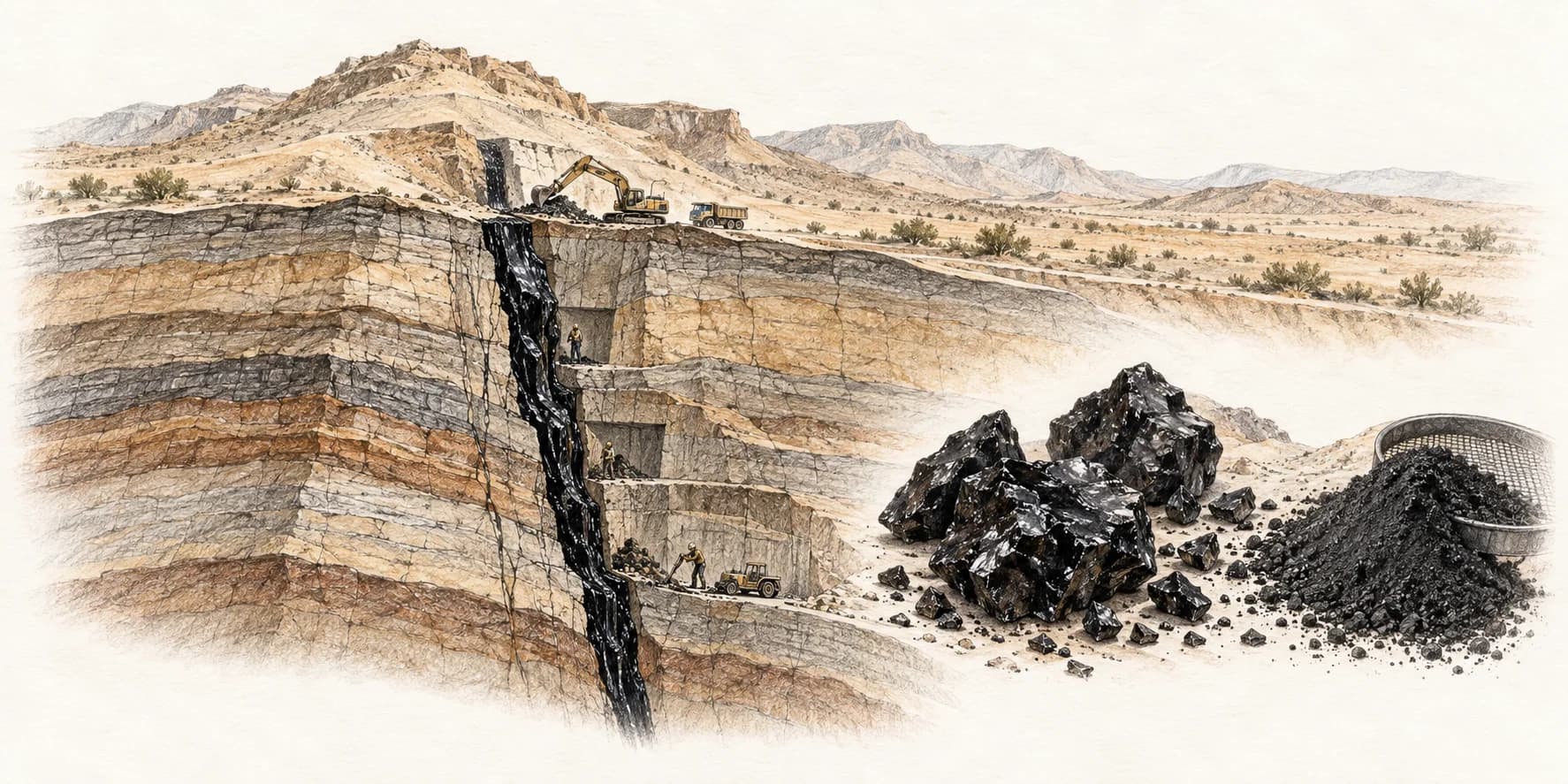
Gilsonite is a stable, solid material that is easy to transport compared with liquid bitumen: it needs no heating, no tanks and no special containers. Even so, the way it is packed and stored affects how well it flows, how easily it disperses and how safely it can be handled. Lump and powder behave differently and need slightly different care.
Common packing options
| Packing | Typical form | Suits | Points to check |
|---|---|---|---|
| Small woven or paper bags (often 25 kg) | Powder and fine granules | Manual dosing at drilling rigs, ink plants and small mixing units | Inner liner for moisture, palletised and shrink-wrapped |
| Jumbo bags (FIBCs, often around 1 tonne) | Granules, powder and lump | Plants with forklifts and bag dischargers | Lifting loops rated for load, discharge spout type |
| Bulk in containers | Lump | Users with their own crushing or melting | Container lined and clean, loading weight limits |
Bags are usually palletised and shipped in dry containers. For long sea voyages, ask for bags with a moisture-resistant liner and for pallets to be stretch-wrapped so that bags do not split or shift.
Why heat matters even for a hard solid
Gilsonite has a high softening point, but powder can still start to stick together well below that temperature when it is under the weight of stacked bags and exposed to sustained heat, such as inside a container standing in summer sun or in an uninsulated warehouse. The result is caked powder that has to be broken up before use and may disperse poorly.
- Store bags in a dry, shaded and ventilated building, off the floor on pallets.
- Limit stacking height so lower bags are not compressed; follow the supplier's guidance.
- Rotate stock on a first-in, first-out basis.
- Keep bags closed until use and reseal part-used bags.
Lump material is far less sensitive to caking and can be stored in covered bays, though it should still be kept clean and dry so that it does not pick up grit or water.
Dust and fire precautions
Like coal, sugar or flour, finely ground gilsonite is a combustible organic dust. A cloud of fine dust in an enclosed space can ignite if there is a spark or hot surface, and settled dust layers can spread a fire. Sensible precautions are:
- Keep dust levels low with local exhaust ventilation at bag tipping and mixing points.
- Clean up spills and settled dust regularly using methods that do not raise dust clouds.
- Keep powder away from open flames, hot work and hot surfaces, and control static on conveying equipment.
- Store away from strong oxidising agents.
Gilsonite is a hydrocarbon and will burn if involved in a fire. Check the product SDS for fire-fighting media, exposure limits for nuisance dust and any site-specific classification.
Personal protection
For routine handling of powder, the usual protection is dust masks or respirators suited to fine particles, safety glasses and gloves. Washing hands before eating and keeping work clothes separate is good practice with any fine dust. Where gilsonite is melted into hot bitumen or oil, the hazards of the hot liquid and its fumes apply, so follow the temperature and protection guidance in both products' SDS.
Receiving a delivery
- Check bag count, labelling and lot numbers against the packing list and certificate of analysis.
- Inspect for torn bags, water damage and caked bags at the bottom of pallets.
- Take a sample from several bags if you test incoming material, and retain a reference sample.
- Move bags into dry storage promptly rather than leaving them in containers or open yards.
Dry, shaded storage and low dust levels solve most handling problems with gilsonite powder.
Packing details to agree before shipment
Confirm bag type and weight, liner, palletisation, marks and labels, and whether you need lump, granules or powder. Ask for the MSDS and a CoA for each lot. Nuroil can supply gilsonite in bags or jumbo bags on FOB, CFR or CIF terms; see the gilsonite page or contact us to discuss packing.