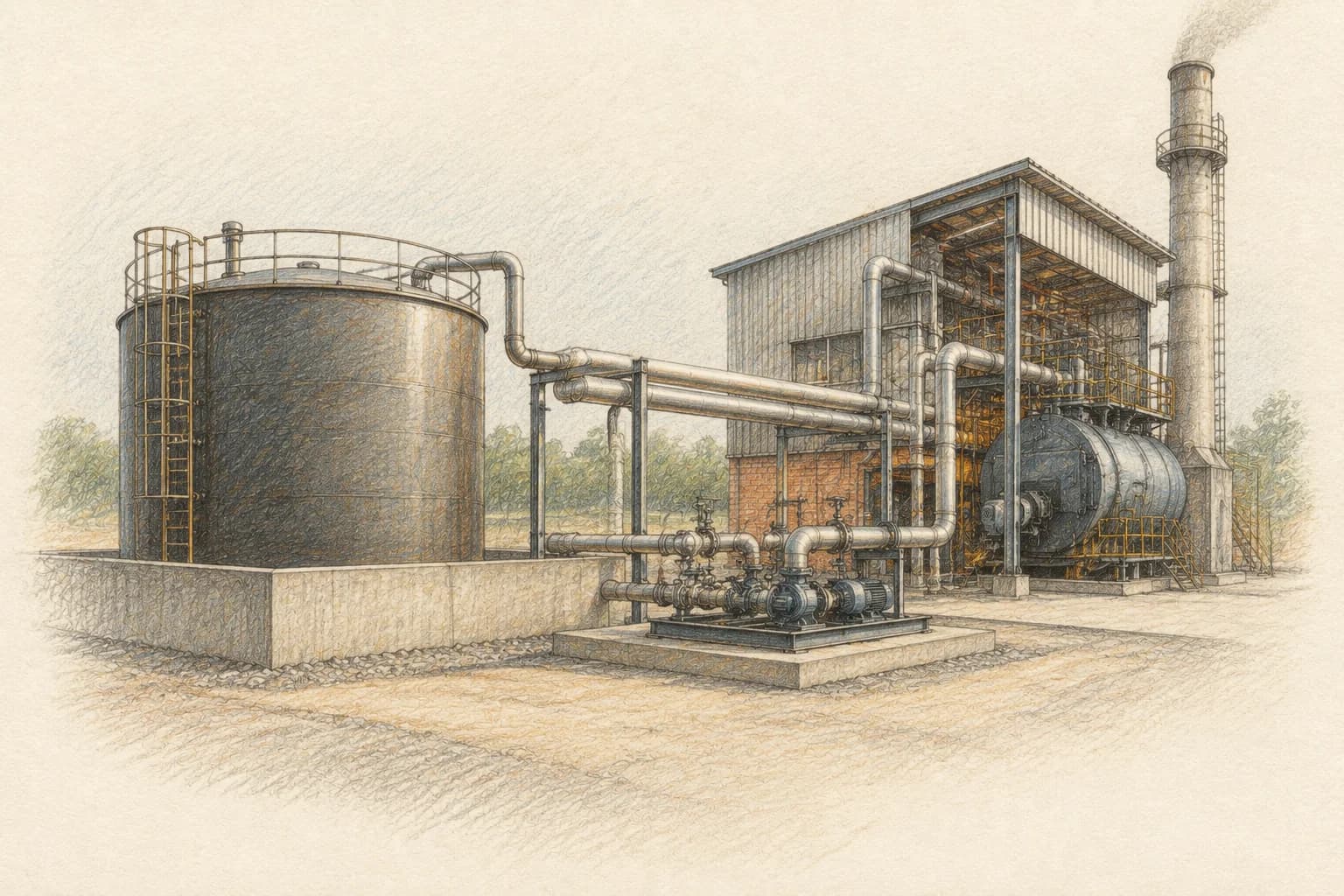
Many boilers, thermic fluid heaters and kilns can be built or converted to burn either furnace oil or a lighter distillate such as light diesel oil (LDO). The choice affects much more than the fuel bill. It changes the storage system, the burner, the amount of maintenance and how the plant behaves on cold mornings. This article sets out the main differences so that buyers and plant engineers can judge which fuel fits their site.
What each fuel is
Furnace oil is a residual fuel: the heavy fraction left after refining, sold in viscosity grades. In the Indian standard IS 1593, for example, grades run from low viscosity (up to 80 cSt at 50 °C) to high viscosity (180 to 380 cSt at 50 °C). It usually needs heating to be pumped and atomised.
Light diesel oil is mostly distillate, sometimes blended with a small portion of residue. It is far thinner, flows at ambient temperature in most climates and is used in boilers and furnaces as well as in medium and slow speed diesel engines.
Side-by-side comparison
| Factor | Furnace oil | Light diesel oil |
|---|---|---|
| Viscosity | High; heating needed for pumping and atomising | Low; usually handled at ambient temperature |
| Storage | Heated, insulated tanks with coils or heaters | Unheated tanks in most climates |
| Burner | Pressure jet, rotary cup or steam/air atomising, with preheater | Simpler pressure jet burners |
| Sulphur | Higher; several percent allowed in heavier grades | Lower |
| Ash and sediment | Present; deposits on heat surfaces | Very low |
| Cold start | Needs heat or a lighter fuel for start-up | Starts readily |
| Maintenance | More frequent cleaning of nozzles, strainers and tubes | Lighter routine maintenance |
| Fuel cost per unit of heat | Usually lower | Usually higher |
When furnace oil makes sense
- Large, steady heat demand where fuel cost dominates the operating budget.
- Sites that already have steam or electric heating for tanks and lines.
- Equipment designed for residual fuel, such as larger water-tube or smoke-tube boilers, rotary kilns and some glass and foundry furnaces.
- Plants with skilled operators who can manage heating, filtration and burner tuning.
When light diesel oil makes sense
- Small or intermittent loads where heated storage would sit idle much of the time.
- Processes that are sensitive to sulphur, ash or soot from the flame.
- Sites with tight emission limits or no capacity for tank heating.
- Standby or start-up fuel on a plant that otherwise burns furnace oil.
Hidden costs to include
A simple price comparison per tonne is misleading. On the furnace oil side, add the energy used for tank and line heating, more frequent cleaning, higher wear on burner parts and possible cold-end corrosion from higher sulphur. On the LDO side, consider the higher fuel cost and, in some regions, different duty or tax treatment. Comparing on cost per unit of useful heat delivered, over a year of real operation, gives a fairer picture.
Fuel choice should follow the equipment and the duty cycle. A burner designed for distillate will not run well on residual fuel without changes to heating, atomising and controls.
Switching between the two
Converting from LDO to furnace oil normally means adding tank heating, line tracing, a fuel preheater and a burner capable of handling heavier oil. Converting the other way is simpler but still needs a burner check, nozzle change and a review of tank cleanliness, since residual deposits can be picked up by the new fuel. Many plants keep both: furnace oil for normal running and a light fuel for start-up and flushing the lines before a shutdown.
Preparing an enquiry
Tell your supplier which equipment the fuel feeds, the viscosity grade or range your burner can handle, sulphur limits from your permit and your monthly consumption. Ask for a certificate of analysis with each delivery. Nuroil supplies furnace oil and other fuel oil grades; details are on the furnace oil page.