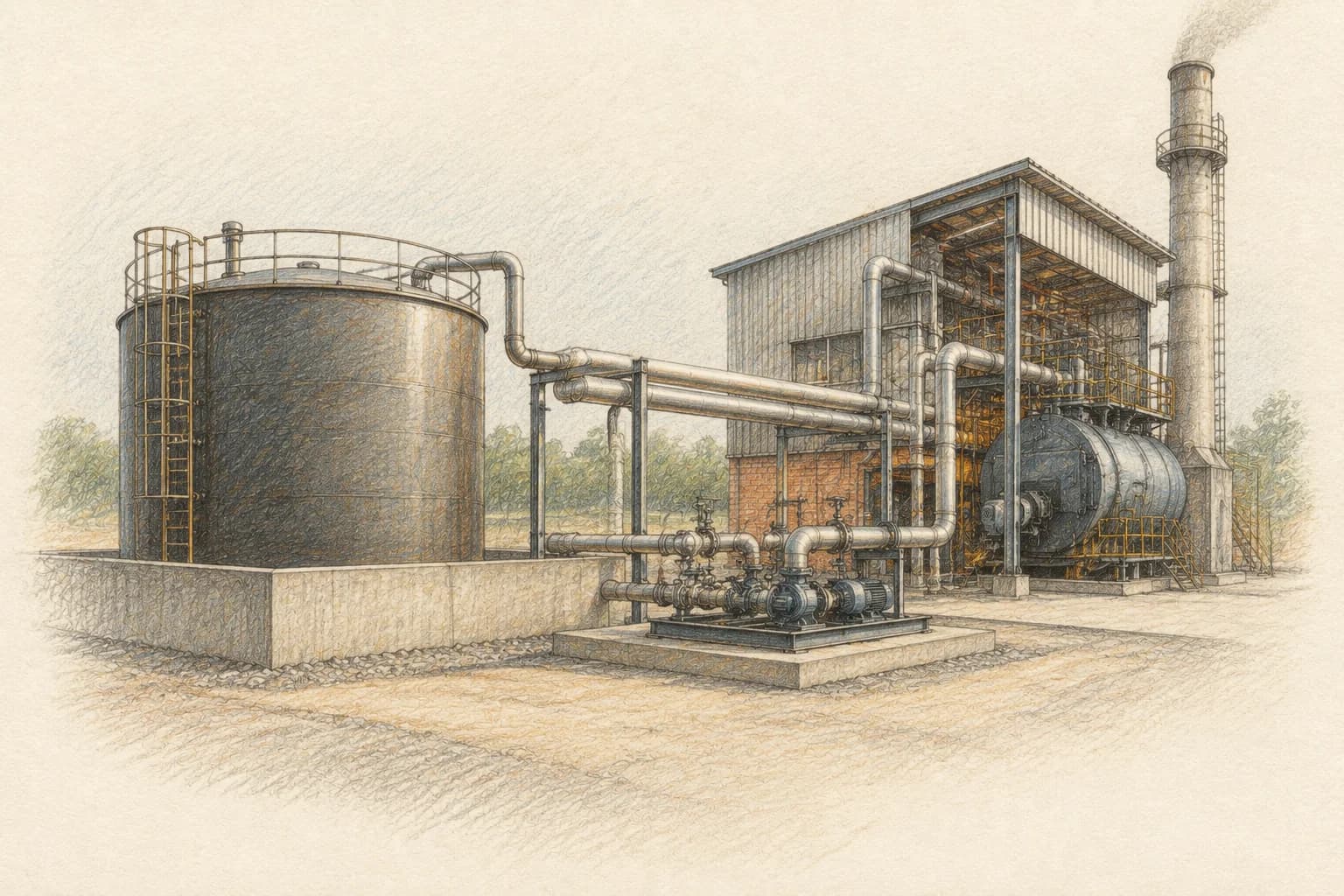
Steam boilers are the best-known users of furnace oil, but a large share is burned in other equipment: thermic fluid heaters, ceramic and lime kilns, glass and metal melting furnaces, reheating furnaces and dryers. Each applies heat differently, and that changes which fuel properties matter most. This guide summarises the main applications and the points users in each should watch.
How the equipment differs
In a boiler, the flame heats water through metal walls, and the combustion gases never touch the product. In many kilns and furnaces, the flame and its gases are in direct contact with the material being heated. Anything carried by the fuel, such as sulphur, ash or soot, can then affect product quality as well as the equipment.
| Equipment | How heat reaches the product | Fuel properties of most interest |
|---|---|---|
| Thermic fluid heater | Indirect, through coils carrying heat transfer oil | Stable viscosity, low sediment, clean combustion to protect coils |
| Ceramic and tile kilns | Direct or semi-direct contact with ware | Sulphur and ash, which can mark glazes; steady flame |
| Lime and cement kilns | Direct contact with raw material | Calorific value and flame shape; sulphur absorbed by product |
| Glass melting furnaces | Flame over the glass bath | Sulphur, vanadium and sodium, which affect refractories and glass |
| Metal reheating and foundry furnaces | Hot gases around steel or castings | Sulphur, which can affect scale and surface quality |
Thermic fluid heaters
These heat a circulating oil to high temperatures for process heating without high-pressure steam. The heating coils can be damaged if the flame impinges on them or if deposits build up and create hot spots. Consistent viscosity at the burner and good atomisation keep the flame shape stable, and low sediment and ash reduce fouling. Regular soot removal from the coil surfaces protects both efficiency and the thermal fluid itself.
Kilns
Furnace oil has long been used in ceramic, refractory, tile and lime kilns. In direct-fired kilns, sulphur oxides from the fuel can react with the product. In some ceramics they can cause surface defects; in lime they are partly taken up by the product. Users with quality-sensitive ware often choose a lower-sulphur grade or a lighter fuel for the final firing stages. A long, steady flame with controlled excess air helps temperature uniformity along the kiln.
Glass and metal furnaces
Glass furnaces run at very high temperatures, and residual fuel ash containing vanadium and sodium can attack refractory linings and regenerator brickwork. Reheating and forging furnaces for steel use furnace oil for its high heat release, but sulphur in the furnace atmosphere can influence scale formation on hot metal. Operators in both industries usually set tighter limits on sulphur and ash than a general boiler user would.
Common good practice
- Heat the fuel to the atomising viscosity recommended by the burner maker, using a controlled heater close to the burner.
- Fit duplex strainers so filters can be cleaned without stopping production.
- Keep excess air as low as the flame allows; it saves fuel and limits sulphur trioxide formation.
- Monitor flue gas oxygen and smoke so that burner drift is caught early.
- Flush burners and lines with a lighter fuel before long shutdowns so heavy oil does not set in them.
- Follow the product safety data sheet for handling hot fuel oil and for spill control.
For direct-fired processes, the fuel is effectively a raw material. Specify sulphur and ash as carefully as you would any other input that touches the product.
Choosing a grade for your process
Many kiln and furnace users run on a medium-viscosity grade such as 180 cSt furnace oil because it balances cost with handling. Plants without much tank heating may prefer a lower-viscosity grade. Where product quality is sensitive to sulphur or ash, specify those limits explicitly rather than relying on the grade maximum.
What to include in an enquiry
Describe the equipment, whether firing is direct or indirect, and any product-quality limits linked to fuel sulphur or ash. Give the viscosity band, monthly consumption and delivery mode. Nuroil supplies furnace oil with a certificate of analysis for each delivery and can provide the SDS and third-party inspection on request; use the quote form to send your details.