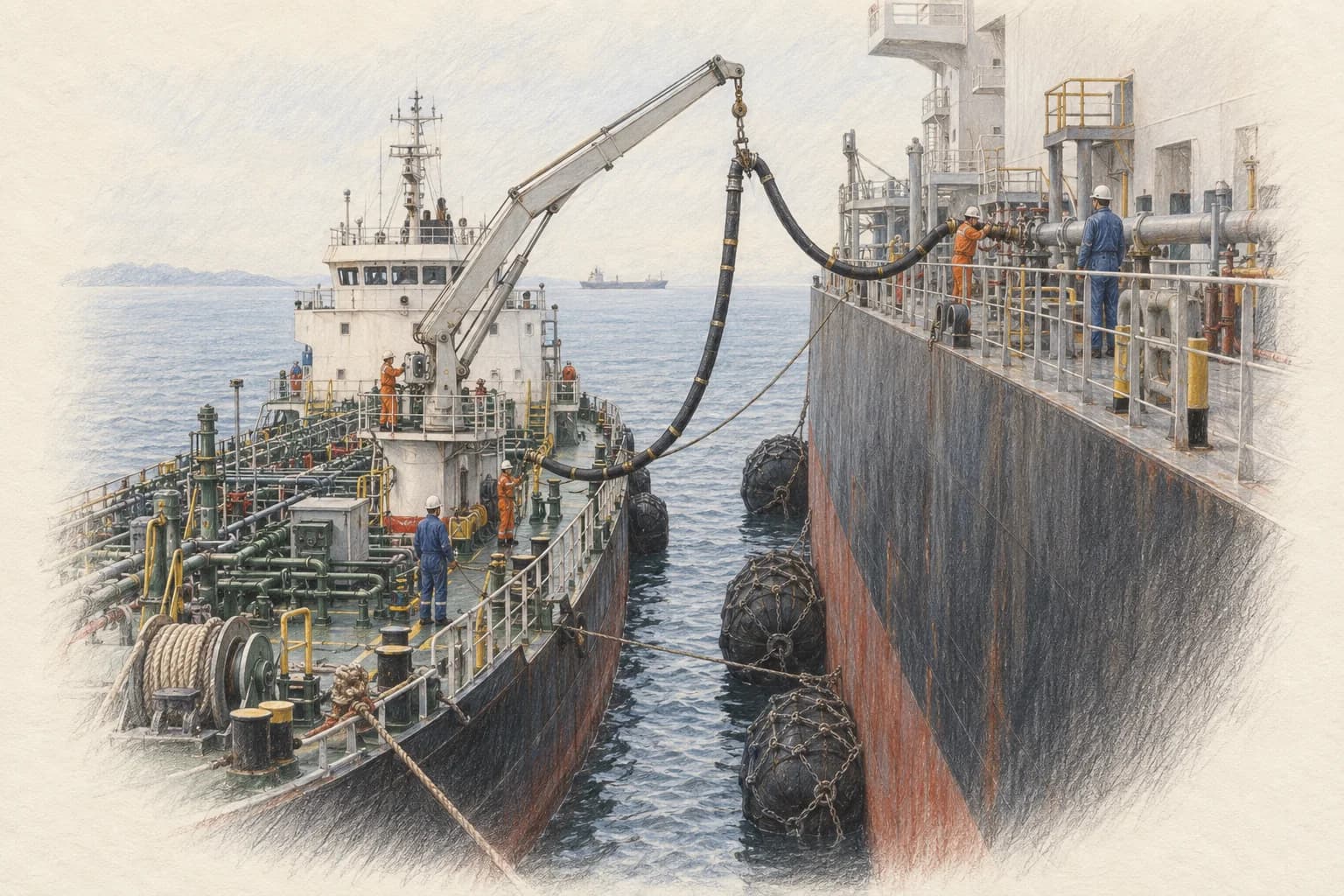
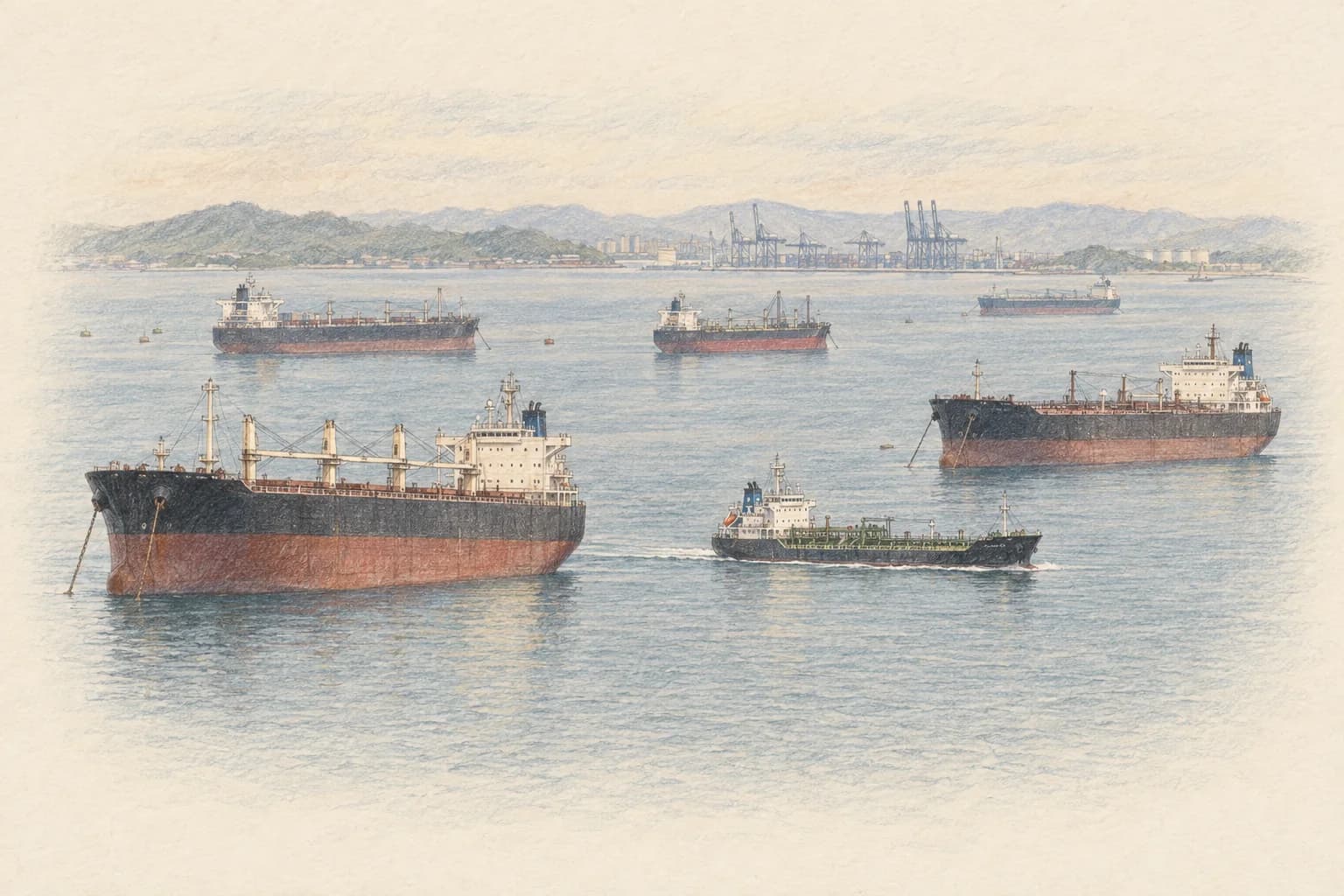
A bunker delivery transfers fuel from a supplier, usually by barge, into a ship's tanks. It is routine for crews and suppliers, but it brings together several parties and regulatory requirements in a short window, often while the ship is working cargo. This guide sets out the usual stages and the paperwork that results.
1. Enquiry and nomination
The buyer, typically the ship operator or charterer, asks for offers for a named fuel grade, quantity, port and delivery window. Once terms are agreed, the supplier issues a confirmation, often called the nomination or stem. This should state:
- Vessel name and IMO number.
- Port, location (berth or anchorage) and delivery dates.
- Fuel grade, ISO 8217 category and edition, and maximum sulphur.
- Quantity, normally in metric tonnes, with any agreed tolerance.
- Applicable terms and conditions and any claims procedure.
2. Preparing the ship
The chief engineer prepares a bunker plan showing which tanks will receive each grade and the planned filling levels, usually leaving a safety margin of free space in each tank. New deliveries are best loaded into empty tanks so they are not mixed with fuel already on board. The crew checks the bunker lines and valves, sets up spill prevention equipment, plugs deck scuppers and agrees communication methods with the barge.
3. Pre-delivery meeting and checks
When the barge is alongside, the ship and supplier complete a pre-delivery checklist. Typical items are:
- Agreed pumping rate and maximum pressure, and signals for slowing and stopping.
- Emergency stop procedures and contact details.
- Opening soundings or meter readings and temperatures on the barge.
- Confirmation of the grade and quality documents for the product to be delivered.
- Agreement on where and how the samples will be drawn.
4. Transfer and sampling
Pumping usually starts at a low rate until the crew confirms fuel is going to the correct tank, then increases to the agreed rate. Tank levels are monitored throughout and the rate is reduced when topping off.
A continuous drip sampler at the ship's manifold collects a representative sample over the whole delivery. MARPOL Annex VI requires a representative sample of each delivery to accompany the bunker delivery note, sealed and signed, to be kept on board for at least 12 months. It is intended for checking compliance with sulphur limits. Additional samples are usually taken for the buyer's quality testing, the supplier and any independent surveyor.
5. Closing figures
After pumping stops and lines are cleared, closing measurements are taken on the barge (or meter readings recorded) and on the ship. Volumes are corrected to 15°C and converted to mass using the delivered density. Any difference between the figures should be raised before signing.
6. The bunker delivery note
The supplier issues a bunker delivery note (BDN), which the ship must keep on board for three years. Under MARPOL Annex VI Appendix V, it must include at least:
| Item | Notes |
|---|---|
| Name and IMO number of the receiving ship | As shown on ship's certificates |
| Port | Location of delivery |
| Date of commencement of bunkering | Start date and time |
| Supplier's name, address and telephone | Legal supplier, not only the barge |
| Product name | Grade delivered |
| Quantity in metric tonnes | Corrected delivered quantity |
| Density at 15°C | In kg/m³, by an accepted test method |
| Sulphur content | % by mass |
| Supplier's signed declaration | Confirming the fuel meets the applicable MARPOL sulphur requirements |
Electronic BDNs are accepted if they contain the same information and are protected against later changes. Industry bodies have reminded suppliers that the declaration wording is often incomplete, so check it before signing.
Do not sign the bunker delivery note until the quantity and grade match what was nominated and the samples have been sealed and labelled.
7. After delivery
The buyer's sample is sent for laboratory testing, and the ship avoids using the new fuel until results are received where operations allow. Any shortfall or quality concern is recorded in a letter of protest and notified to the supplier within the contractual time limit.
Arranging a delivery
Clear nominations prevent most disputes: name the grade, standard edition, sulphur limit, quantity and delivery window, and agree the sampling and measurement method in advance. Nuroil can arrange bunker and marine fuel supply on request; see the bunker and marine fuel page or contact us.