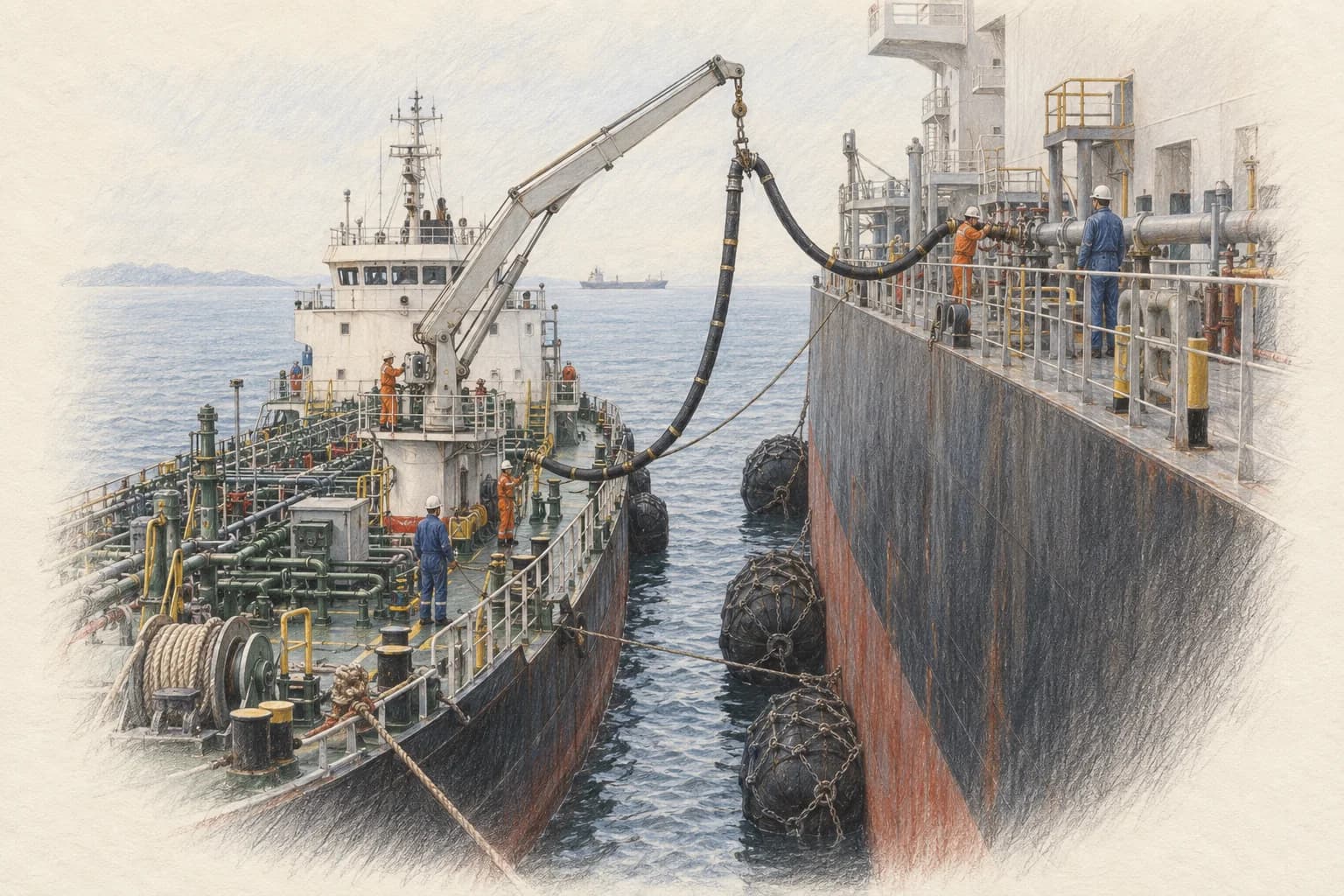
Bunker fuel is sold by mass, in metric tonnes, but it is usually measured as a volume in tanks or through a meter. Converting one to the other involves temperature, density and several tables, and each step can introduce error. Quantity disputes are among the most common bunkering claims. This guide explains how quantity is calculated and what helps keep the ship's and supplier's figures in agreement.
How delivered quantity is calculated
Where tanks are used for measurement, the barge's tanks are gauged before and after delivery:
- Observed volume. Soundings or ullages are taken in each tank and converted to volume using the calibrated tank tables, with corrections for trim and list.
- Temperature. The fuel temperature in each tank is measured with a calibrated thermometer.
- Standard volume. The observed volume is converted to volume at 15°C using a volume correction factor (VCF) from the petroleum measurement tables, usually ASTM Table 54B for fuel oils, based on density at 15°C.
- Mass. Standard volume is multiplied by a weight correction factor (WCF, ASTM Table 56) derived from density to give metric tonnes in air.
- Delivered quantity. The difference between opening and closing quantities on the barge is the amount delivered.
The ship carries out the same calculation on its receiving tanks for comparison.
Where differences come from
| Source of error | Effect |
|---|---|
| Temperature measured inaccurately or at one level only | Wrong VCF, which can shift the figure by several tonnes on a large delivery |
| Different editions of correction tables on ship and barge | Small but persistent mismatches |
| Trim and list not corrected | Wrong observed volume |
| Uncalibrated sounding tapes or thermometers | Unreliable readings |
| Contents of pipelines not accounted for | Fuel counted as delivered but left in lines |
| Air entrained in the fuel | Inflated volume readings that fall as bubbles escape |
The "cappuccino" effect
Blowing air into fuel during delivery creates foam that increases its apparent volume. Soundings taken on the barge or volumetric meter readings then overstate the amount delivered, and the ship's tank levels drop after delivery as the air escapes. Warning signs include froth on the fuel surface when sounding, gurgling noises in the line, the delivery hose jerking, and a density result lower than expected. Crews who suspect it should record observations, re-sound tanks after the fuel settles, and issue a protest.
Mass flow meters
A Coriolis mass flow meter measures mass directly as fuel passes through it and is not fooled by entrained air in the same way as volumetric meters. Some major bunkering ports require approved mass flow meters on supply barges, and the meter printout then forms the basis of the delivered quantity. Even where meters are used, crews should still sound their own tanks during and after delivery as a cross-check.
Practical steps for ship and buyer
- Attend the barge's opening and closing gauging, or have an independent surveyor do so.
- Check that sounding tapes and thermometers carry valid calibration certificates.
- Agree which correction tables and density value will be used before pumping starts.
- Take temperatures at more than one level in large tanks.
- Account for line contents, both on the barge and in the ship's bunker lines.
- Re-sound receiving tanks after the fuel has settled.
- If figures differ beyond the agreed tolerance, note it on the bunker delivery note or in a letter of protest before the barge leaves, and notify the supplier within the contract time limit.
Most quantity disputes are settled by the quality of records made during the delivery: calibrated readings, agreed tables and a timely protest.
Why it matters beyond the invoice
On time-chartered ships, the charterer usually pays for fuel and tracks consumption. If a ship accepts barge figures it doubts, the shortfall may later appear as excess consumption, which the owner may be asked to explain. Accurate measurement protects both commercial parties.
Agreeing measurement terms up front
When arranging bunkers, confirm in the nomination whether quantity will be determined by mass flow meter or by barge tank gauging, which tables apply, whether independent surveyors may attend, and the time limit for quantity claims. Nuroil can arrange marine fuel deliveries on request; use the request a quote form or see the bunker and marine fuel page.