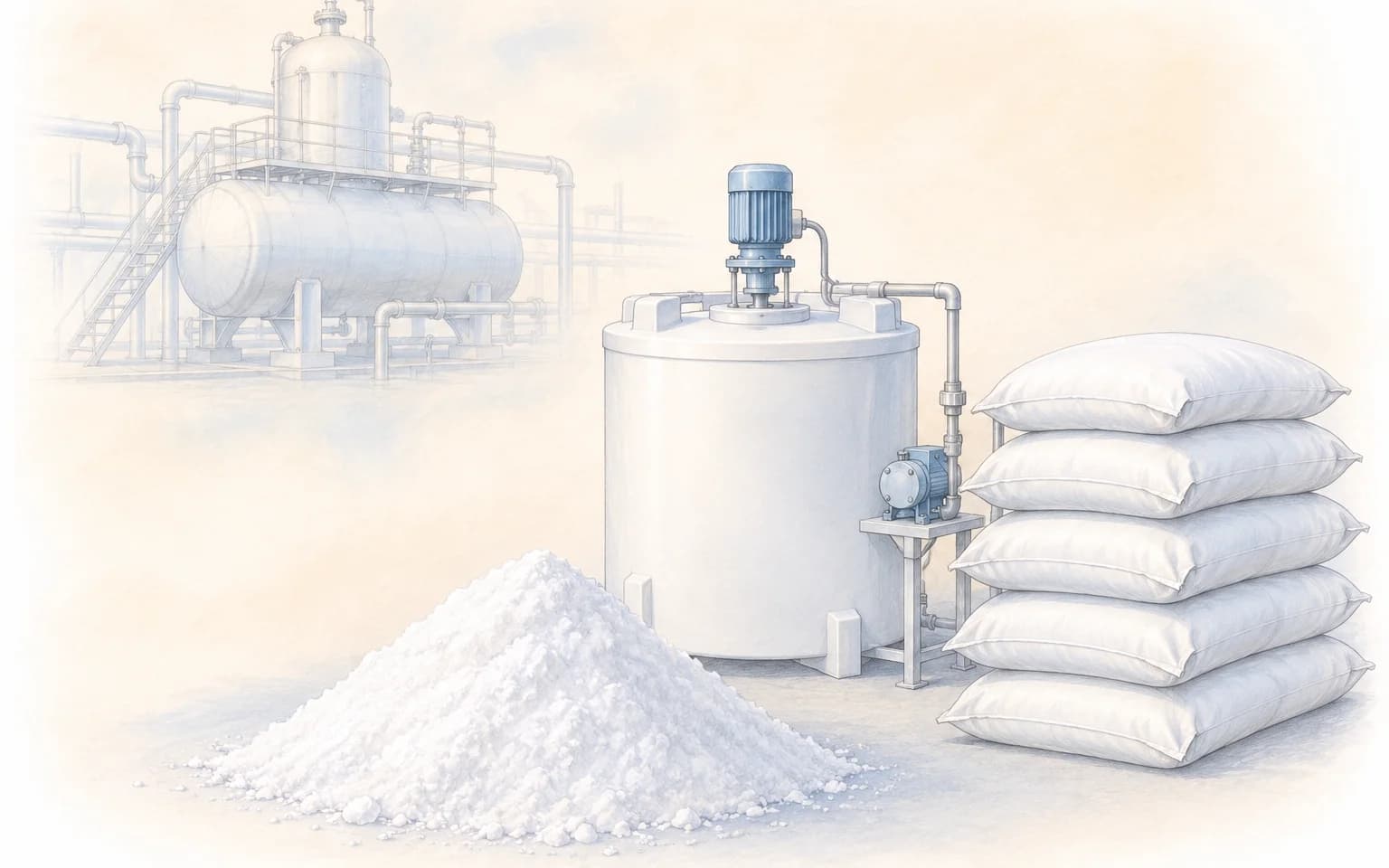
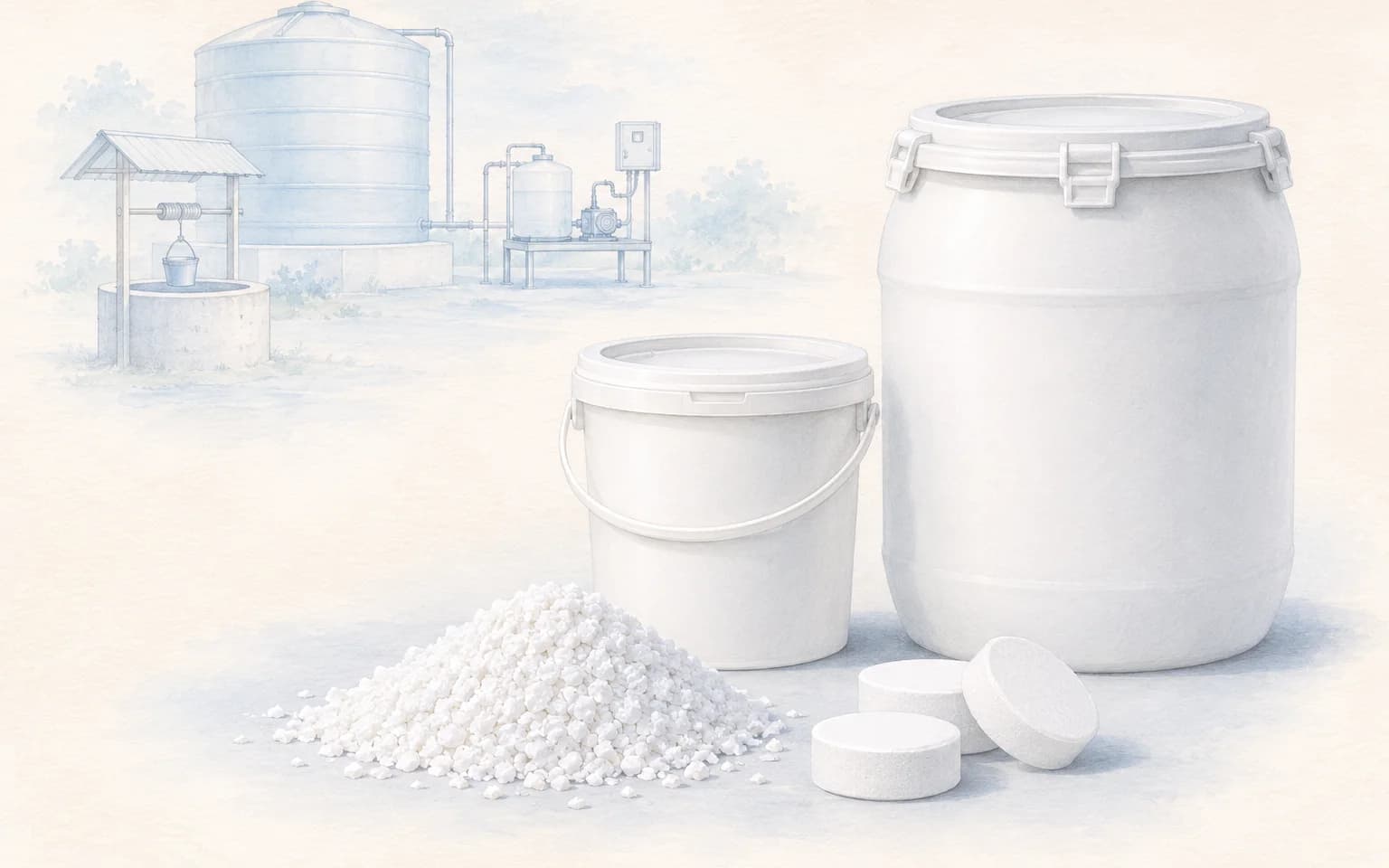
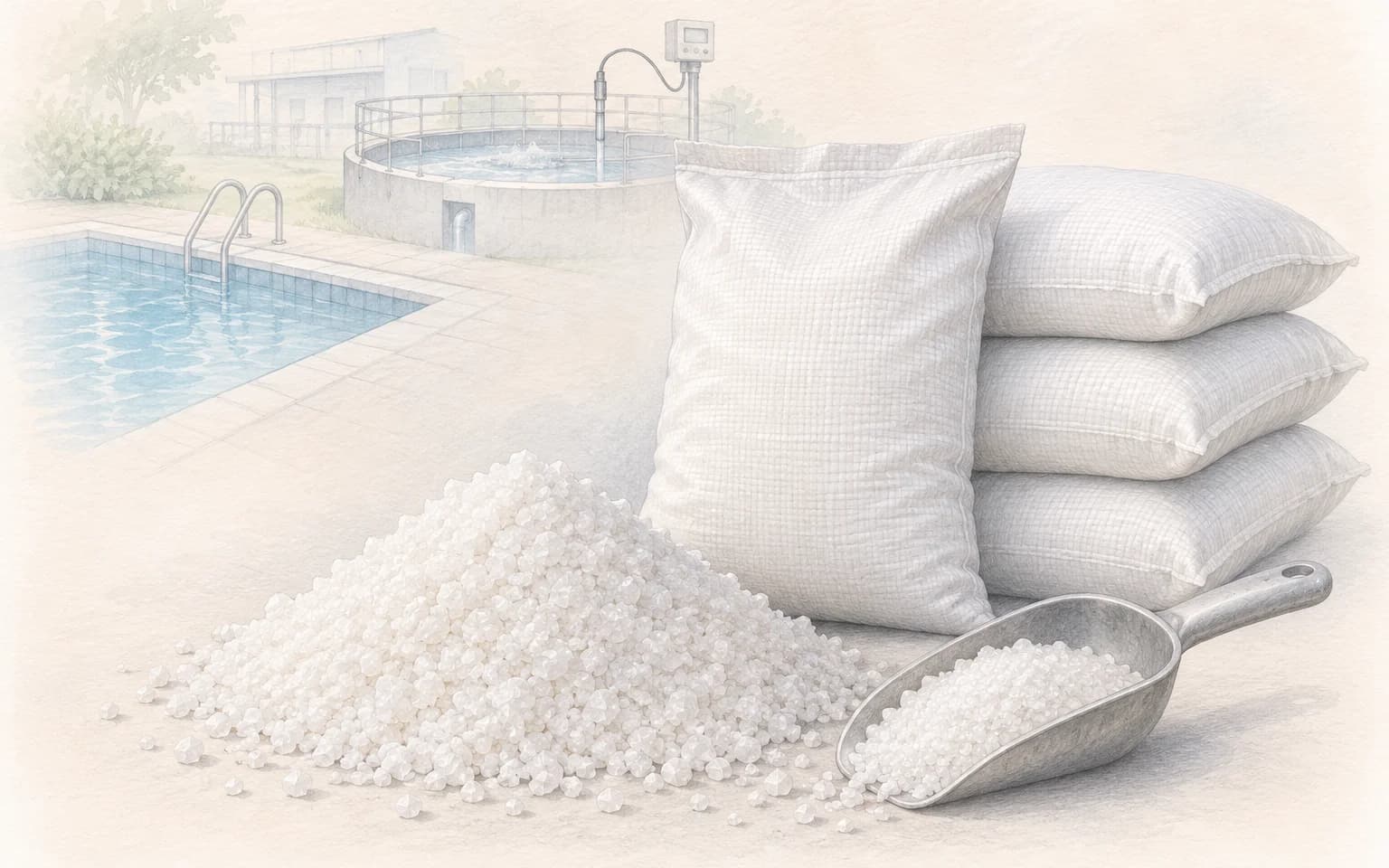
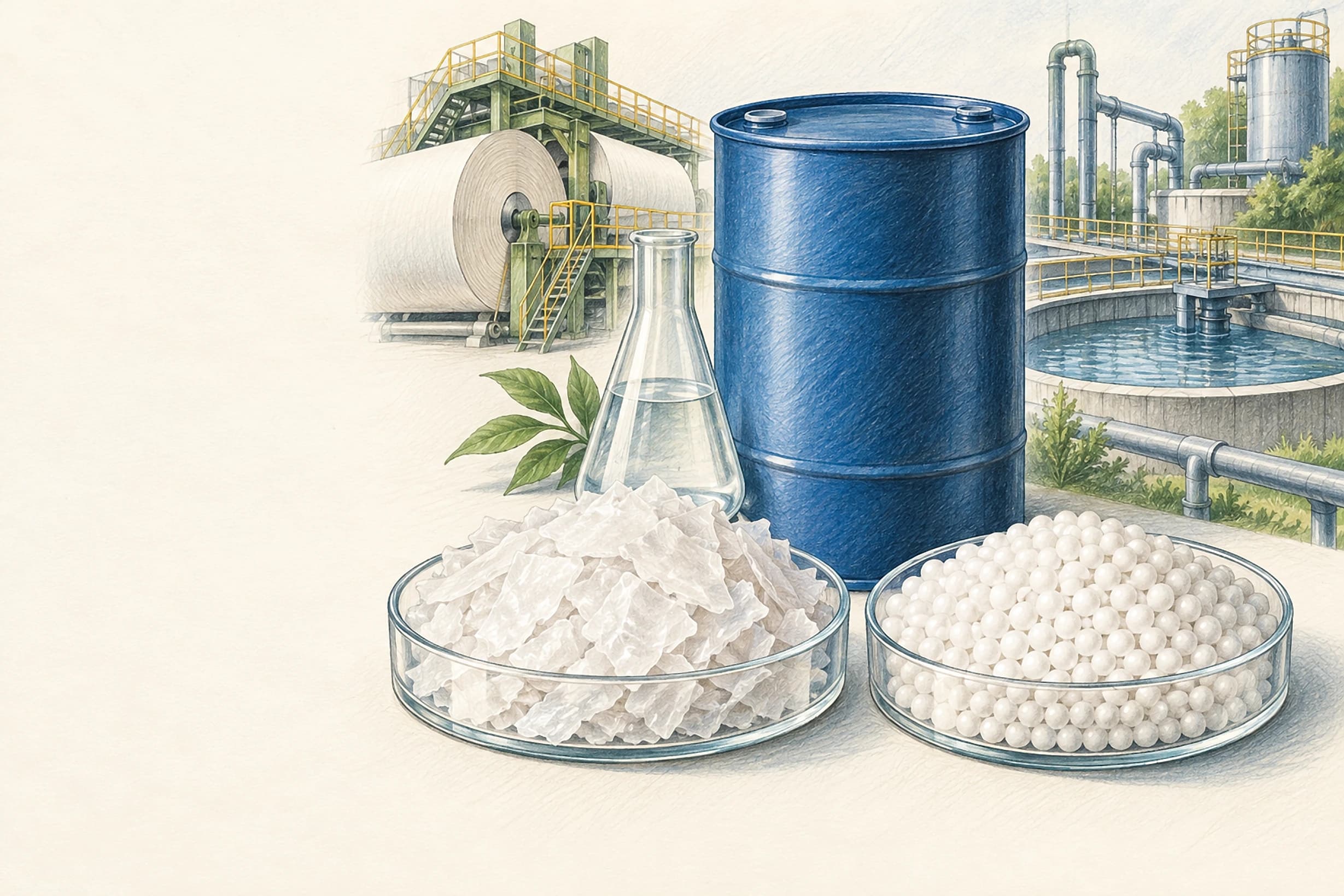
Sodium metabisulphite (SMBS), 97% min, the standard dechlorination chemical for RO feed water, pools and treated effluent, and a reducing agent for industry.
Sodium metabisulphite, Na₂S₂O₅, is a white powder that dissolves in water to sodium bisulphite, a mildly acidic reducing solution. It reacts instantly with free chlorine and chloramines, turning them into harmless chloride, which is why it is dosed ahead of reverse-osmosis membranes and into water and effluent before discharge.
It also removes dissolved oxygen and serves as a reducing agent and preservative in industry. It gives off sulphur dioxide with acids and in humid air, so it is kept sealed, dry and well ventilated.
Protects RO membranesRemoves the chlorine that damages polyamide membranes, dosed as a solution ahead of the RO train.
Fast and completeReacts with free chlorine in seconds, so short contact times are enough.
Concentrated and dryAbout 65% SO₂ in a stable powder: easy to store and make up into fresh stock solution.
Documented qualityEach offered batch comes with its Certificate of Analysis and safety data sheet.
What Nuroil does on every order
Why choose SMBS from Nuroil?
Checked against the batch CoA
Assay, SO₂, iron and insolubles are reviewed on the batch certificate before loading.
Straightforward shipping
Not dangerous goods for transport, so it ships as general cargo on most routes.
Packed against moisture
Lined bags, sealed tight so the powder keeps its strength.
One desk, firm offers
FOB, CFR or CIF from our Sharjah trade desk, usually within 24 hours.
02 TECHNICAL DATA
Technical specification.
Sodium metabisulphite (Na₂S₂O₅)
97% min (96.5% on some offers)Iodometric titration
Sulphur dioxide (SO₂)
65% min (theoretical 67.4%)Iodometric titration
Iron (Fe)
0.003–0.005% maxColorimetric / ICP
Water-insoluble matter
0.02–0.05% maxGravimetric
pH (5% solution)
4.0–4.8pH meter
Arsenic (As)
1 mg/kg max (food and water grades)AAS / ICP
Appearance
White or slightly yellowish powderVisual
Odour
Faint sulphur dioxide
01TECHNICAL 97%
Water and industry
The usual grade for dechlorination, RO pretreatment, effluent, mining, textiles and tanning.
02FOOD GRADE
E223
Higher purity limits and food-grade certificates, for preserving food and beverages; quoted on request.
03POWDER
Dissolve and dose
Made up into a fresh stock solution, typically a few percent, for dosing pumps.
04LOW IRON
Sensitive processes
Lower iron and insolubles where staining or deposits matter; confirm against the CoA.
Selection guidance Tell us the water you treat, the chlorine level and the dosing method, and we will confirm the grade.
Both reduce chlorine and oxygen. SMBS is the usual dechlorinator; sodium sulphite is the boiler oxygen scavenger.
Property
Sodium metabisulphiteThis page
Sodium sulphite
Formula
Na₂S₂O₅
Na₂SO₃
Solution pH
Acidic, about 4–5
Alkaline, about 9–10
Dose per mg of chlorine
About 1.4 mg in theory
About 1.8 mg in theory
Dechlorination
Most used
Effective
Best suited to
RO feed, pools, effluent
Boiler feedwater, alkaline systems
03 HOW IT IS MADE
From sulphur dioxide to dry powder.
Sulphur is burned to sulphur dioxide, which is absorbed into a soda ash solution until it is saturated with sodium bisulphite. Sodium metabisulphite crystallises from the liquor and is centrifuged and dried.
01
Sulphur and soda ash
Sulphur is burned to sulphur dioxide; soda ash makes the absorbing solution.
02
Absorption
Sulphur dioxide is absorbed until the liquor is saturated with bisulphite.
03
Crystallisation
Metabisulphite crystals form, and are separated in a centrifuge.
04
Drying and packing
The powder is dried, tested for assay and SO₂, and sealed in lined bags.
04 APPLICATIONS
Where it dechlorinates.
01
RO pretreatment
Removing chlorine ahead of reverse-osmosis membranes in desalination and process water plants.
02
Pools
Lowering chlorine after shock dosing or before draining, and neutralising over-chlorination.
03
Effluent dechlorination
Removing residual chlorine from treated effluent before discharge.
04
Mining
Gold processing, cyanide destruction and flotation.
05
Textiles and leather
Antichlor after bleaching, and a reducing agent in tanning.
06
Chemicals and preservation
Reducing agent in synthesis; preservative in food grade only.
05 SAFETY & HANDLING
Protect your eyes. Keep acids away.
This summary does not replace the Safety Data Sheet. Review the SDS and site procedure before first handling.
Danger
H302 Harmful if swallowed.
H318 Causes serious eye damage.
EUH031 Contact with acids liberates toxic gas.
UN
Not regulated
Transport
Not dangerous goods
01
Causes serious eye damage
Wear goggles or a face shield and gloves when handling the powder or solution.
02
Never mix with acids
Acids release sulphur dioxide, a toxic, choking gas.
03
Keep from oxidisers
Do not mix the dry powder with calcium hypochlorite or other chlorine products: they react violently.
04
Ventilate
Make up solutions in a ventilated area; sulphites can trigger reactions in people with asthma.
05
Exposure response
Rinse eyes at once with plenty of water for at least 15 minutes and seek medical attention.
Sealed, dry and ventilated.
StoreSealed and dry
Moist air slowly oxidises it and releases SO₂; kept sealed and dry it keeps its strength for a long time. Stock solutions lose strength in days, so make them up fresh. Confirm the producer’s shelf life with the offer.
Keep bags closedAir and moisture weaken it; reseal opened bags at once.
Dry, ventilated storeUnder cover, off the floor and out of direct sun.
SegregateApart from acids and from chlorine products and other oxidisers.
Keep it coolHeat speeds its breakdown and SO₂ release; avoid hot containers and roofs.
Plan documentation early.
HS code2832.10
CAS number7681-57-4
EC number231-673-0
E numberE223
TransportNot regulated
GHS
Acute toxicity (oral) category 4; serious eye damage category 1; EUH031, contact with acids liberates toxic gas
Transport
Not dangerous goods by road, sea or air
RO membranes
Confirm the dose and residual with the membrane supplier’s guidelines
National regulations
Confirm local approval for drinking-water or food use, and import requirements
06 PACKING OPTIONS
Choose your packing.
Pack sizes and container loads depend on the producer and grade; the offer confirms them.
Smaller orders
25 kg bags
Woven polypropylene or paper bags with polyethylene liner, palletised.
In theory about 1.34 mg of SMBS removes 1 mg of free chlorine. In practice 1.5 to 3 mg per mg is dosed to allow for oxygen and a safety margin; your membrane or plant guidelines set the residual.
02Why is SMBS used before RO membranes?
Polyamide RO membranes are damaged by chlorine. SMBS removes the chlorine left from pretreatment just before the membranes.
03How long does a stock solution last?
Dilute SMBS solutions take up oxygen from the air and lose strength within days. Make up fresh solution regularly and keep the tank covered.
04Is it dangerous goods for shipping?
No. Sodium metabisulphite is not dangerous goods by road, sea or air, according to producer SDSs, though it is classified for eye damage and must be labelled.
05What is the HS code?
Sodium metabisulphite is usually declared under HS 2832.10. Its CAS number is 7681-57-4.
06Can it be used in pools?
Yes, to bring down high chlorine levels. Dose it in small steps, test the water, and keep it well apart from chlorine products in storage.
07What documents come with a shipment?
A Certificate of Analysis and Safety Data Sheet, with the Certificate of Origin as required.
Include the grade, the use, quantity, packing and destination for a tailored offer. We reply with a firm FOB, CFR or CIF offer, usually within 24 hours.