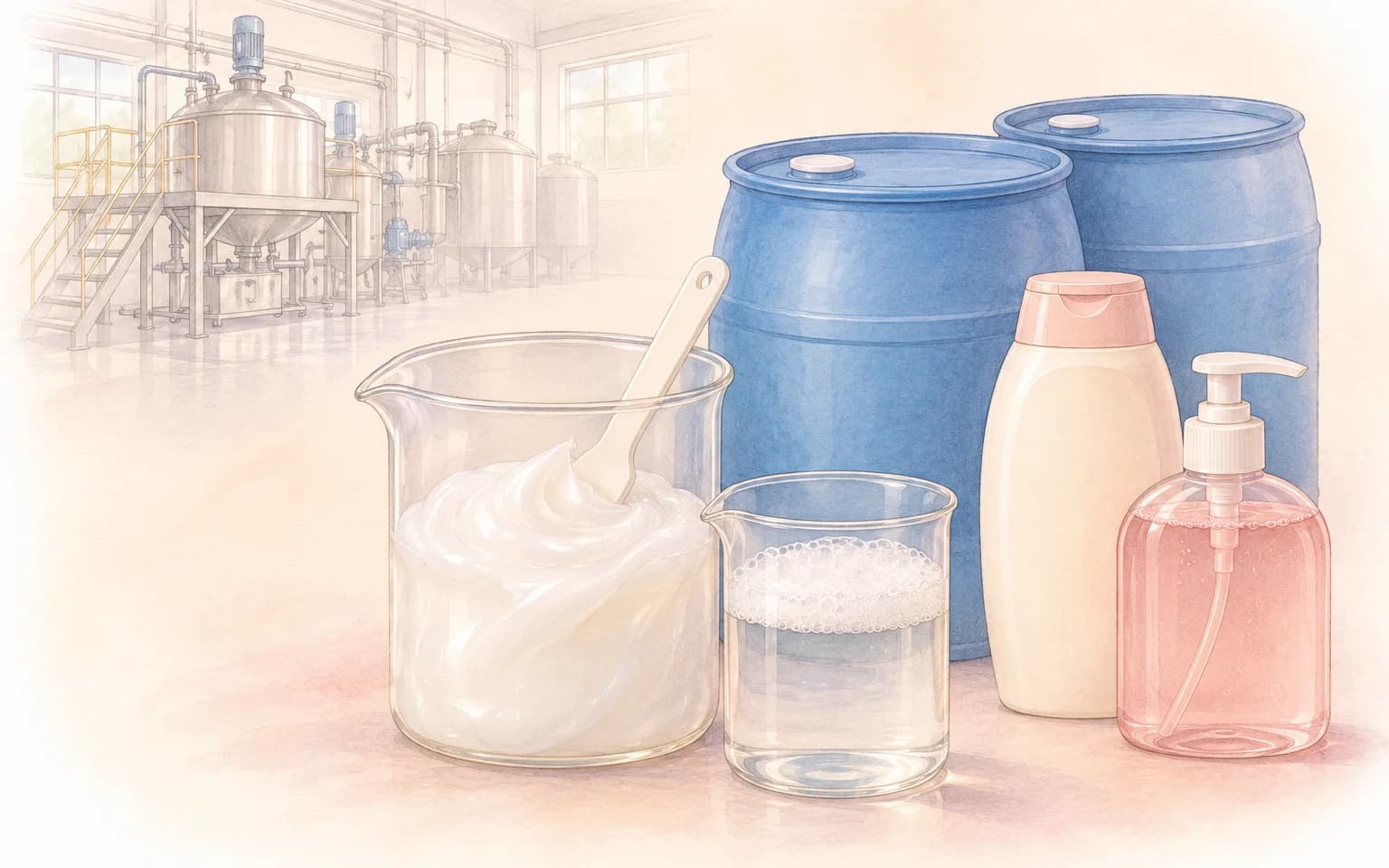
Glycerine, glycerol, C₃H₈O₃, is a clear, colourless, odourless and sweet-tasting viscous liquid. It draws in and holds moisture, which makes it the standard humectant in skin care, soap and toothpaste, and it mixes freely with water and alcohol.
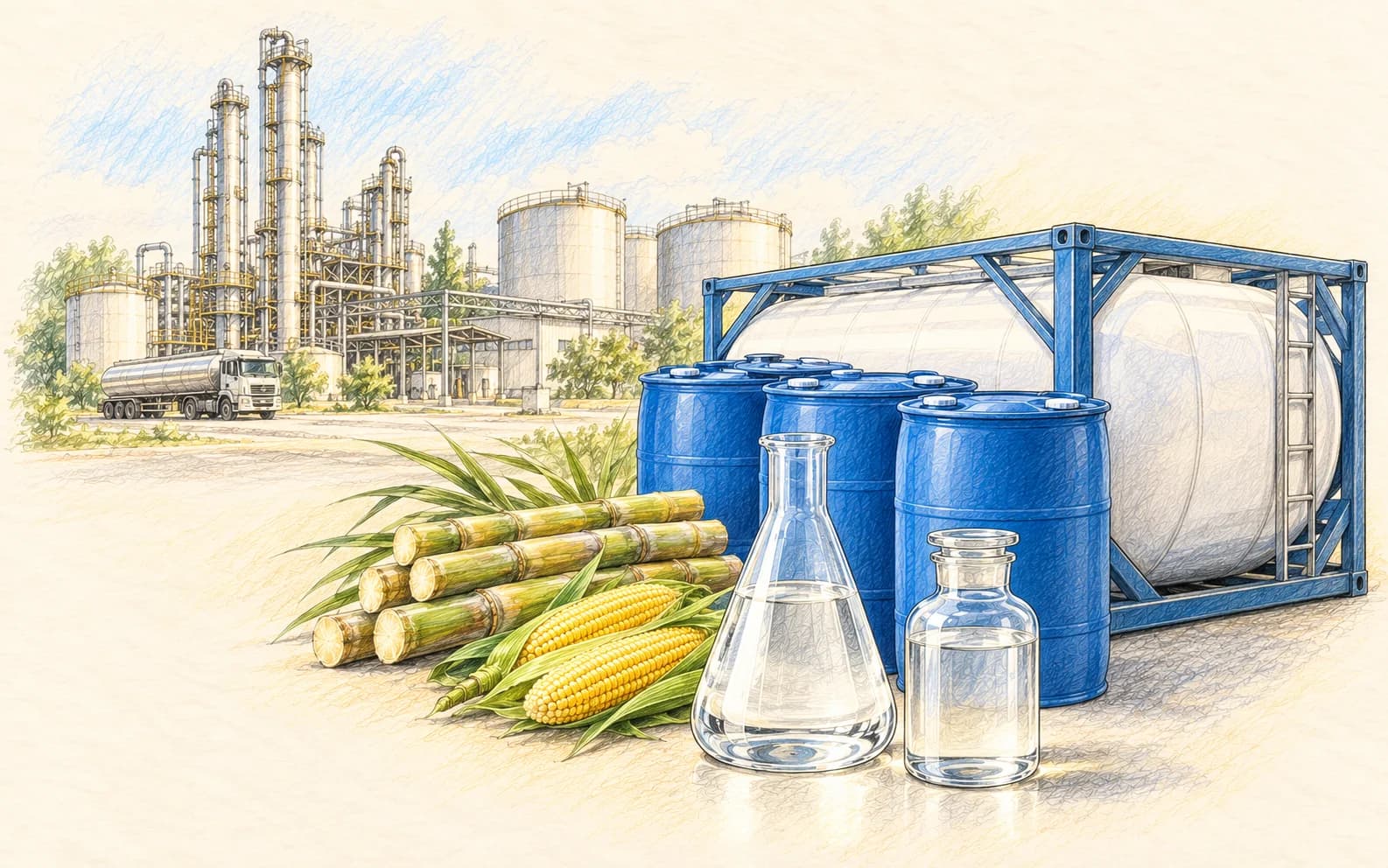
It is recovered as a co-product when vegetable oils and fats are split into fatty acids, made into soap or converted to biodiesel. The crude glycerine is distilled and bleached to refined grades that meet the US and European pharmacopoeias.
Identity
Formula
C₃H₈O₃
Molar mass
92.09 g/mol
CAS
56-81-5
Glycerol · C₃H₈O₃Why Glycerine
Pharmacopoeia gradeRefined glycerine tested to USP and Ph. Eur., including the diethylene glycol limit.
The grade you needRefined for personal care, pharma and food; technical and crude for industry and refiners.
Vegetable originVegetable-origin supply, with kosher and halal certificates where the producer holds them.
Documented qualityEach offered batch comes with its Certificate of Analysis and safety data sheet.
What Nuroil does on every order
Why choose glycerine from Nuroil?
Checked against the batch CoA
Glycerol, water, colour, chlorides and DEG / EG are reviewed before loading.
Grade matched to your use
USP / Ph. Eur., technical or crude, with origin and certificates confirmed with the offer.
Packed to stay dry and clean
Sealed drums, IBCs or food-grade bulk, because glycerine draws in moisture.
One desk, firm offers
FOB, CFR or CIF from our Sharjah trade desk, usually within 24 hours.
02 TECHNICAL DATA
Technical specification.
Glycerol content (refined)
99.5% min (USP assay 99.0–101.0%)Titration (USP / Ph. Eur.)
Water
0.5% maxKarl Fischer
Colour
10 APHA maxAPHA (Pt-Co)
Chlorides
10 ppm maxUSP / Ph. Eur.
Sulphates
20 ppm maxUSP / Ph. Eur.
Residue on ignition
0.01% maxGravimetric
Diethylene glycol and ethylene glycol
0.10% max eachGC (USP)
Appearance
Clear, colourless, viscous liquidVisual
01REFINED USP / PH. EUR.
Personal care, pharma and food
99.5% min, tested to the pharmacopoeia, for skin care, soap, toothpaste, syrups and food (E422).
02TECHNICAL GRADE
Industrial uses
Refined glycerine not certified to a pharmacopoeia, for resins, antifreeze, inks and industrial formulations.
03CRUDE GLYCERINE
For refiners
About 80% glycerol, with salts, water and organic matter, from biodiesel or soap plants, for refining or industrial use.
Selection guidance Tell us the use, the standard you buy to and any origin or certificate requirement, and we will confirm the grade.
One molecule in three qualities. The right one depends on what you make.
Property
Refined USP / EP
Technical
Crude
Glycerol
99.5% min
By producer, often 98–99.5%
About 80%
Colour
Water-white
Near colourless
Yellow to brown
Salts and organic matter
Trace
Low
Several per cent
Pharmacopoeia tested
Yes
No
No
Best suited to
Personal care, pharma, food
Resins, antifreeze, industry
Refining, industrial uses
03 HOW IT IS MADE
From oils and fats to refined glycerine.
Vegetable oils and fats are split with water, saponified or converted to biodiesel, releasing crude glycerine. It is treated to remove salts, methanol and fatty matter, distilled under vacuum and bleached with activated carbon to refined grade.
01
Oils and fats
Vegetable oils and fats from fat splitting, soap making or biodiesel.
02
Splitting
The oils are split, releasing crude glycerine of about 80%.
03
Distillation
The crude is treated, then distilled under vacuum.
04
Bleaching and packing
Activated carbon bleaches it; each batch is tested and packed.
04 APPLICATIONS
Where it holds moisture.
01
Skin care
Humectant in lotions, creams and hand sanitisers.
02
Soap and toothpaste
Moisturising soaps, transparent soap and toothpaste.
03
Pharmaceuticals
Solvent, sweetener and excipient in syrups and topical products.
04
Food
Humectant and sweetener, E422, in refined food grade.
05
Resins and polyols
Alkyd resins, polyether polyols and esters.
06
Industrial uses
Antifreeze, inks, lubricants and cellulose films.
05 SAFETY & HANDLING
Low hazard. Handle it cleanly.
This summary does not replace the Safety Data Sheet. Review the SDS and site procedure before first handling.
Not classified
GHS Not classified as hazardous.
UN
Not regulated
Transport
Not dangerous goods
01
Not classified as hazardous
Refined glycerine is not classified under GHS; wear gloves and eye protection as for any process liquid.
02
Slippery spills
Spills make floors very slippery; absorb, then wash the area with water.
03
Away from strong oxidisers
Glycerine can react violently with strong oxidisers such as potassium permanganate.
04
Combustible when hot
Its flash point is about 160 °C; keep heated glycerine from ignition sources.
05
Exposure response
Rinse eyes with water; wash skin with soap and water. Seek medical advice if irritation persists.
Sealed and dry.
Keep itSealed and dry
Glycerine draws in moisture from the air, so open containers lose strength. Kept sealed it is stable for a long time, commonly two years for refined grade; confirm the producer’s shelf life with the offer.
Keep containers closedIt is hygroscopic; reseal drums and IBCs at once.
Clean, suitable tanksStainless steel, aluminium or lined tanks, kept clean for food and pharma grades.
Warm before pumping in the coldIt thickens sharply as it cools; warm gently to pump.
First in, first outUse the oldest stock first and keep the batch label with each lot.
Plan documentation early.
HS code2905.45
HS code1520.00
CAS number56-81-5
EC number200-289-5
TransportNot regulated
GHS
Not classified as hazardous
Transport
Not dangerous goods by road, sea or air
Pharmacopoeia
USP and Ph. Eur. glycerol monographs for refined grade, including the DEG and EG limits
Food use (E422)
Only certified food-grade batches; confirm local food-authority requirements
06 PACKING OPTIONS
Choose your packing.
Pack sizes and container loads depend on the producer and grade; the offer confirms them.
Small quantities
HDPE drums
Sealed drums of about 250 kg, the usual packing for refined glycerine.
Yes. Glycerol is the chemical name; glycerine or glycerin is the usual trade name for the commercial product.
02What does USP / Ph. Eur. grade mean?
The glycerine meets the US Pharmacopeia and European Pharmacopoeia monographs, including assay, impurity and diethylene glycol limits, so it can be used in pharmaceuticals and personal care.
03What is crude glycerine?
The raw co-product of biodiesel or soap making, about 80% glycerol with water, salts and organic matter. It is sold to refiners or for industrial use.
04Is it vegetable or animal origin?
Most traded glycerine is of vegetable origin. The origin and any kosher or halal certificate are confirmed with the offer.
05What is the HS code?
Refined glycerol is classified under HS 2905.45; crude glycerol under HS 1520.00. Its CAS number is 56-81-5.
06Is it dangerous goods?
No. Glycerine is not classified as hazardous and is not regulated for road, sea or air transport.
07What documents come with a shipment?
A Certificate of Analysis and Safety Data Sheet, with the Certificate of Origin and any kosher, halal or origin statement as required.
Include the grade, the standard you buy to, any origin or certificate requirement, quantity and destination for a tailored offer. We reply with a firm FOB, CFR or CIF offer, usually within 24 hours.