The API classifies base oils into five groups. Groups I, II and III are all refined from crude oil, and between them they supply most of the world's lubricants. The definitions rest on just three numbers, but the practical differences go further. This article explains what changes from one group to the next and how lubricant makers use each one.
The definitions
| Group | Saturates | Sulphur | Viscosity index | Main refining route |
|---|---|---|---|---|
| I | Below 90% and/or | above 0.03% | 80 to 120 | Solvent refining and dewaxing |
| II | 90% or more | 0.03% or less | 80 to 120 | Hydrotreating or hydrocracking |
| III | 90% or more | 0.03% or less | 120 or more | Severe hydrocracking and hydroisomerisation |
Note the "and/or" for Group I: an oil only needs to fail one of the saturates or sulphur limits to fall into Group I.
Group I: the solvent-refined workhorse
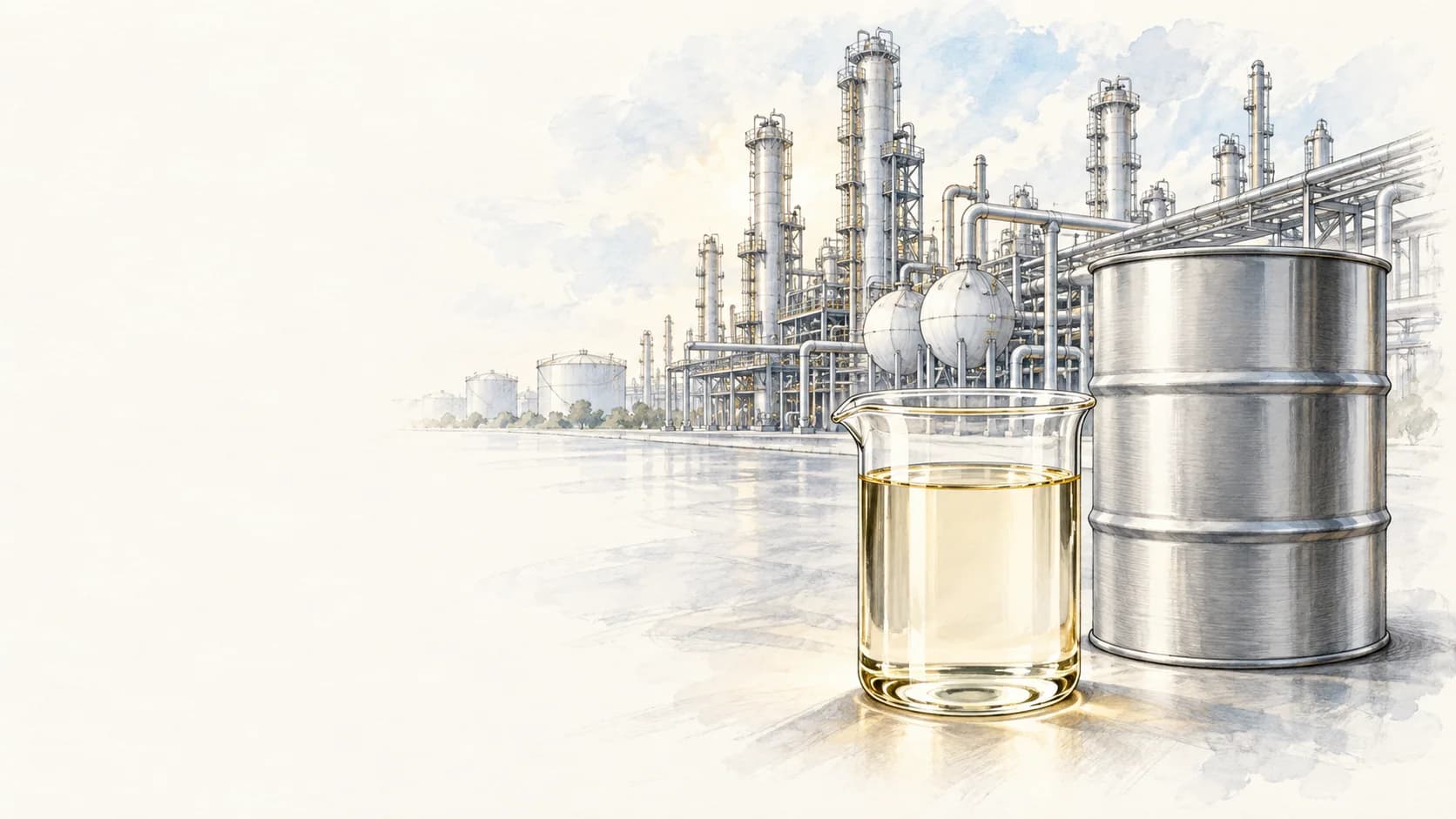
Group I base oils are made by removing aromatics and wax from vacuum distillates with solvents. Some sulphur, nitrogen and ring compounds remain, which gives the oil its pale amber colour. Typical grades are SN150, SN500 and bright stock.
- Strengths: good solvency for additives, wide availability of heavy grades, and generally the lowest cost.
- Limits: lower oxidation stability than hydroprocessed oils and a VI usually in the 90s.
- Typical uses: industrial gear and hydraulic oils, marine and railroad engine oils, greases, metalworking fluids and process oils.
See Group I base oil.
Group II: cleaner and more stable
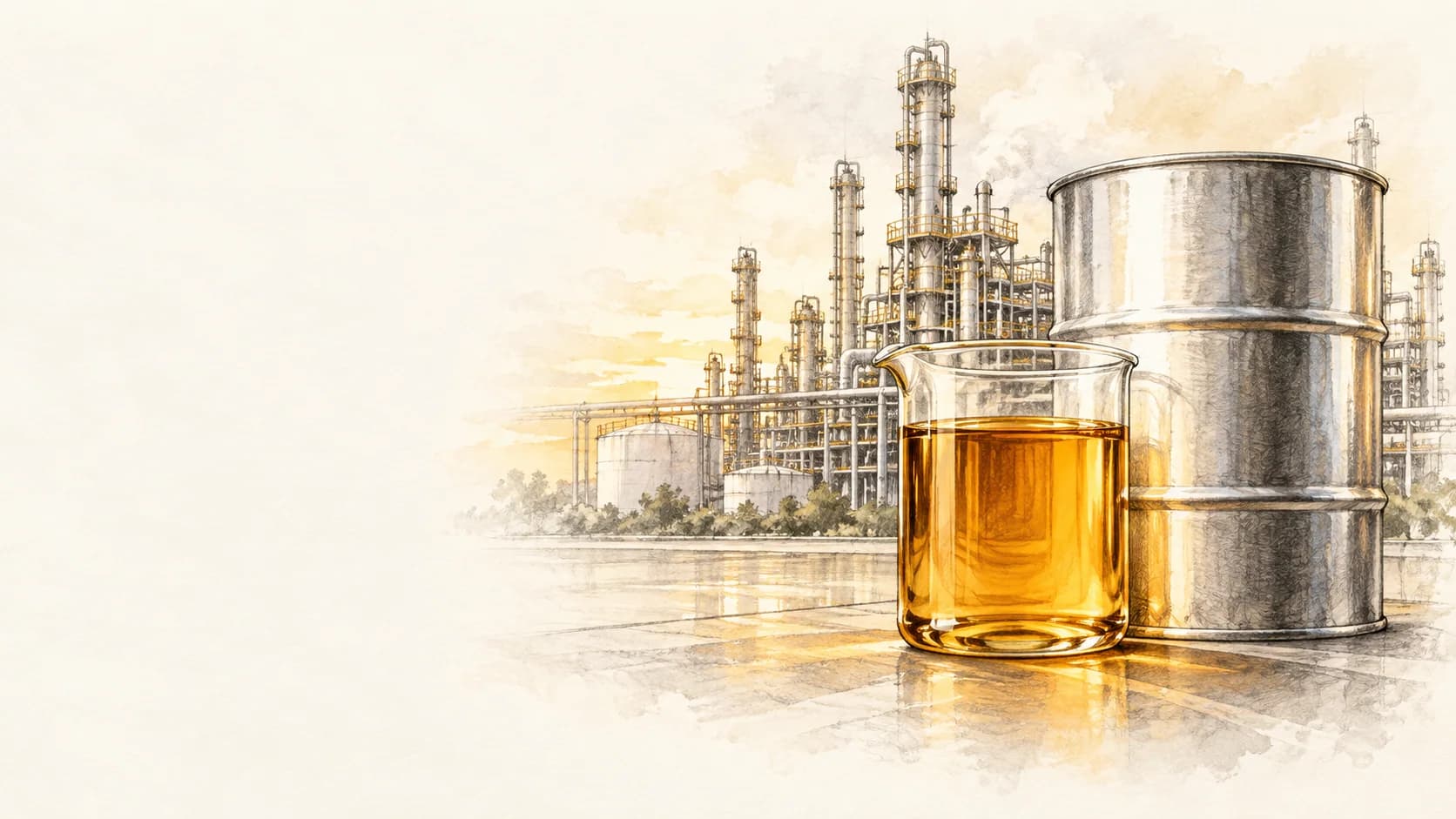
Group II oils are made with hydrogen under pressure, which converts or removes most of the sulphur, nitrogen and aromatic molecules. The result is a nearly colourless oil with higher saturates and noticeably better oxidation and thermal stability than Group I.
- Strengths: longer oil life, cleaner running, good response to antioxidant additives.
- Limits: slightly lower solvency than Group I, and fewer heavy viscosity grades.
- Typical uses: passenger car and heavy-duty engine oils, hydraulic and turbine oils.
See Group II base oil.
Group III: high viscosity index
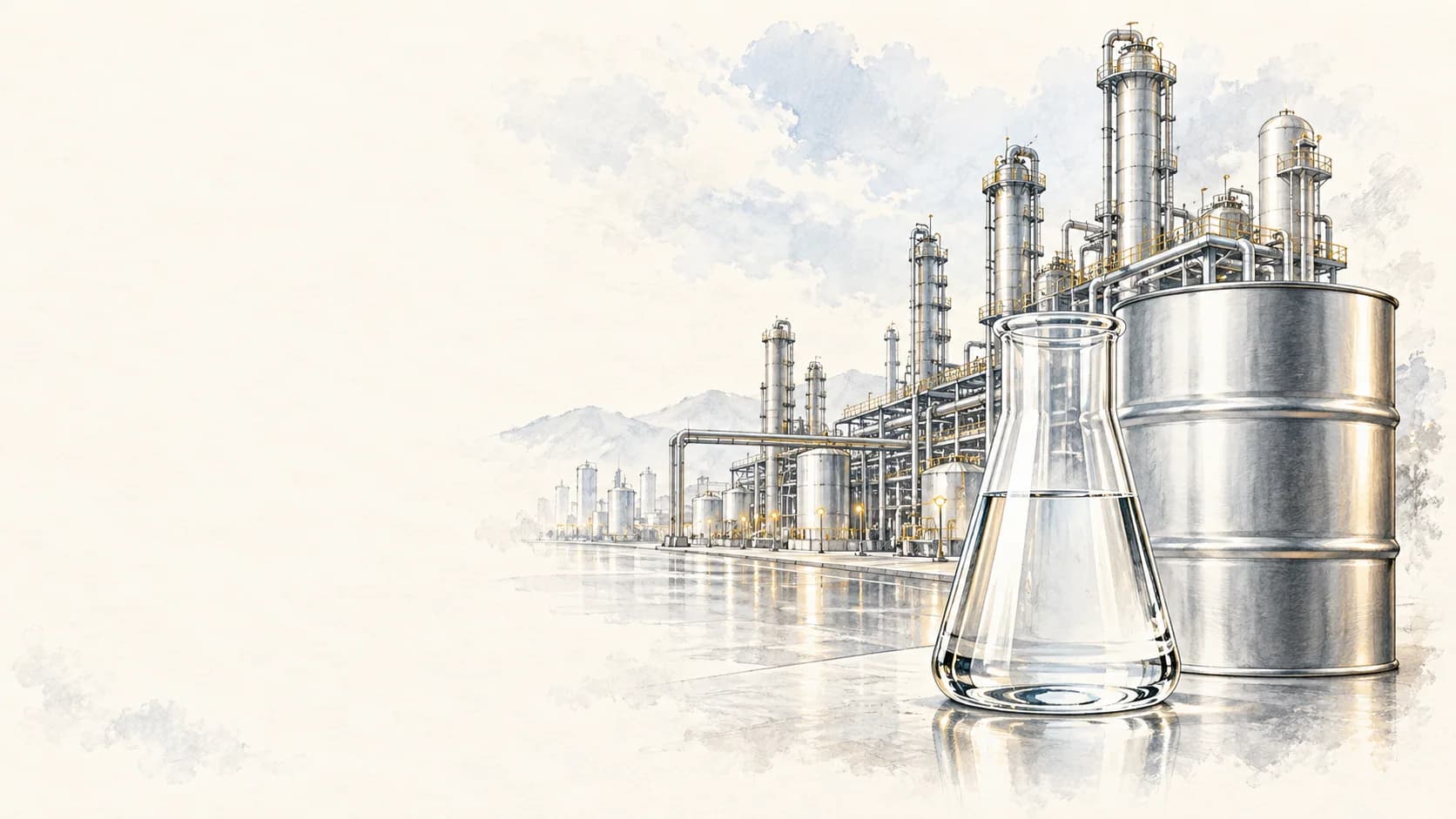
Group III oils go through more severe hydrocracking at higher temperature and pressure, often followed by isomerisation of wax molecules. They are water-white, very highly saturated and have a VI of at least 120. Because of this performance, they are widely used in lubricants marketed as synthetic, although whether they count as mineral or synthetic has been debated.
- Strengths: high VI, strong oxidation stability and generally low volatility in lighter grades.
- Limits: lower solvency. Highly saturated, non-polar oils can struggle to keep some additives and oxidation products in solution, so formulators may add more polar co-base stocks or dispersants.
- Typical uses: low-viscosity and fuel-economy engine oils, premium automatic transmission and hydraulic fluids.
See Group III base oil.
Choosing between them
Blenders rarely ask which group is best. They ask which group meets the finished product specification at a sensible cost. A heavy industrial gear oil may be built mainly on Group I with bright stock. A modern low-viscosity engine oil may need Group III to meet volatility and viscosity limits. Many products use a mix.
- Volatility depends heavily on viscosity grade and cut, so check the Noack value on the certificate rather than assuming it from the group.
- Switching groups in an existing formulation can change additive solubility, seal compatibility and test results. It normally needs re-testing.
The group sets the floor for quality. The grade, the certificate and how the oil behaves in your formulation decide whether it works.
Specifying the group in an enquiry
Name the group and grade, then add the limits that matter to your product: viscosity range, minimum VI, maximum colour, maximum pour point and, for engine oils, maximum Noack volatility. Ask for a recent CoA and the MSDS. Nuroil sources base oils from established producers and supplies a CoA with every delivery.