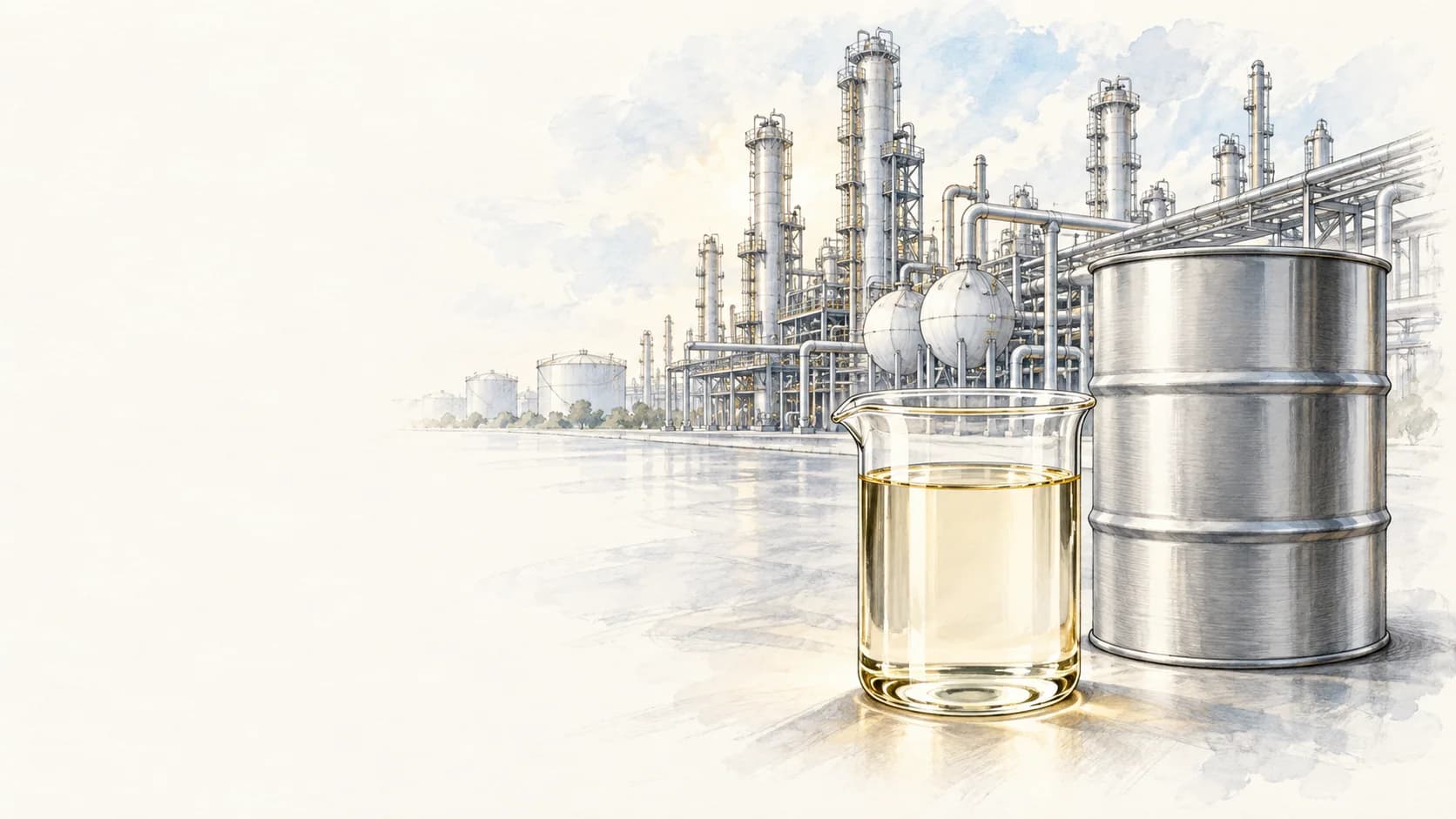
A medium-to-heavy Group II neutral grade, with a complete property-by-property specification.
Group II is produced by hydrocracking vacuum-distilled petroleum fractions with hydrogen, heat and a catalyst. High saturates and low sulphur give better oxidation stability, clearer colour and lower odour than Group I.
Share your application, target viscosity and additive system and our team will confirm the fit and the supply arrangement.
Identity
Group
II · hydrocracked
KV40
95–107 cSt
VI
95–110
Group II base oil · hydrocracked mineral oilWhy N 500
Better oxidation stabilityResists breakdown under heat and oxygen more effectively than Group I.
Low sulphurSupports emissions-conscious modern engine oil formulation.
Clear, low-odour appearanceImproves how the finished product looks and smells.
Reliable global availabilityA current volume leader with competitive mid-market pricing.
Modern formulation fitWell suited to conventional and semi-synthetic engine oils.
What Nuroil does on every order
Why choose N 500 from Nuroil?
Checked against the batch CoA
Every shipment carries a Certificate of Analysis confirming the key grade properties.
Grade matched to your formulation
Share your application, target viscosity and additive system and we confirm the fit.
Drum to bulk
Drums, IBCs, flexitanks and road tanker or bulk, sized to your consumption.
One desk, firm offers
FOB Jebel Ali, Port Khalid or Hamriyah; CFR and CIF on request, usually within 24 hours.
02 TECHNICAL DATA
Catalogue specification.
Kinematic viscosity at 100 °C
10.0–12.0 cStASTM D445
Kinematic viscosity at 40 °C
95–107 cStASTM D445
Viscosity index (VI)
95–110ASTM D2270
Flash point
230 °C minASTM D92
Sulphur content
0.012 wt% maxASTM D2622
Pour point
−12 °C maxASTM D97
The Group II grades side by side. N 500 is one of 4; choose by the viscosity your blend needs.
Property
N 70
N 150
N 500This page
N 600
Viscosity
Lowest
Light to medium
Medium to heavy
Higher
KV at 100 °C
On request
5.0–5.6 cSt
10.0–12.0 cSt
On request
KV at 40 °C
On request
28–32 cSt
95–107 cSt
On request
Viscosity index
On request
95–110
95–110
On request
Flash point
On request
210 °C min
230 °C min
On request
Pour point
On request
−12 °C max
−12 °C max
On request
Best suited to
Lighter industrial and hydraulic fluids
Engine oils and hydraulic fluids
Industrial and higher-duty hydraulic oils
Gear oils and heavier industrial blends
03 HOW IT IS MADE
Hydro- processing.
Group II is produced by hydrocracking vacuum-distilled petroleum fractions with hydrogen, heat and a catalyst, then dewaxed, finished and tested.
01
Vacuum distillation
Petroleum fractions are separated by boiling range
02
Hydrocracking and dewaxing
Hydrogen, heat and a catalyst remove sulphur and wax
03
Finishing
The oil is finished for colour and stability
04
Testing
Each batch is tested against the grade specification
04 APPLICATIONS
Where it is used.
01
Engine oils
A primary stock for conventional and semi-synthetic engine oils, including modern API SN/SP formulations.
02
Hydraulic fluids
Better oxidation stability can extend fluid service life compared with Group I.
03
Gear and transmission oils
Higher-viscosity grades support gear oil and transmission fluid formulation.
04
Industrial lubricants
A performance step up from Group I without Group III cost where very high VI is unnecessary.
05 SAFETY & HANDLING
Generally not classified. Handle it cleanly.
Base oils are generally not classified as hazardous. The Safety Data Sheet for the offered grade decides; review it before first handling.
Not classified
GHS Base oils are generally not classified as hazardous. Check the SDS for the offered grade.
UN
Not regulated
Transport
Not dangerous goods, per SDS
01
Follow the SDS
Classification, first aid and fire-fighting measures are on the Safety Data Sheet for the offered grade.
02
Wear suitable PPE
Use appropriate protective equipment during transfer, sampling and spill response.
03
Contain spills
Absorb spilt oil and keep it out of drains and watercourses.
04
Keep it clean
Use closed, clean equipment so the oil stays free of water and other products.
Clean, dry and closed.
Keep itClean, dry and closed
Use closed, clean tanks and protect the oil from moisture and contamination. The batch CoA records the delivered quality.
Keep it dryClosed, clean tanks; protect the oil from moisture and contamination.
Separate gradesDedicate or thoroughly clean lines, pumps and tanks before grade changes.
Control temperatureAvoid direct sunlight and extreme temperature changes during storage.
Check older sealsWhen reformulating from Group I, confirm compatibility with seals designed around higher-sulphur stock.
Standards and regulatory reference.
HS code2710.19
TransportNot regulated
API Base Oil Interchange Guidelines
Defines Group II by saturates, sulphur and viscosity index
ASTM D445 / D2270
Kinematic viscosity and viscosity index
ASTM D92 / D97
Flash point and pour point
ASTM D2622
Sulphur content
REACH (EU)
Chemical registration requirements for relevant imports into the EU
Destination regulations
National chemical and commodity import rules vary by market
06 PACKING OPTIONS
Drum, IBC, flexitank or bulk.
Packing availability is confirmed for N 500 and the offered origin. Container loads in the planner are typical planning figures; the offer confirms them.
Small quantities
Drums
Typically 200 L steel drums, palletised for staged handling and storage. For trials and lower volumes.
Typical loads used for planning. Your offer confirms the exact packing and load for the product and source.
720 ft containers
drums
556
Last 20 ft container
94% full
Minimum orderBy grade and packingShare your requirement; feasibility is confirmed with the quote
OfferWithin 24 hoursGrade, viscosity target, quantity, packing and destination
DocumentsCoA with every batchSDS and Certificate of Origin on request
07 BEFORE YOU ORDER
Frequently asked questions.
01What is N 500 base oil used for?
A medium-to-heavy Group II neutral grade, with a complete property-by-property specification. Tell us your application, target viscosity and additive system and we will confirm the fit.
02Can I download the N 500 specification?
Yes. The technical data sheet and the specification sheet are available as PDF downloads on this page.
03What is Group II base oil?
Group II is a hydrocracked mineral base oil with at least 90% saturates, no more than 0.03% sulphur and improved oxidation stability.
04What is the difference between Group II and Group I?
Group II is hydrocracked, giving it higher saturates, lower sulphur and better oxidation stability than solvent-refined Group I.
05What documents come with each shipment?
Every shipment includes a Certificate of Analysis confirming key grade properties. Certificate of Origin, SDS and third-party inspection reports are available on request.
06What packing formats are available?
Drums, IBCs, flexitanks and road tanker or bulk shipment. Availability depends on the grade, quantity and receiving facilities.
07What Incoterms do you offer?
FOB is our standard quoted term from Jebel Ali, Port Khalid and Sharjah Hamriyah. CFR and CIF offers to your destination port are available on request.
08What is the minimum order quantity?
MOQ depends on the grade and packing format. Share your requirement and we will confirm feasibility with your quote.
Share the grade, viscosity target, quantity, packing and destination. Our team replies with the offer within 24 hours. We reply with a firm FOB, CFR or CIF offer, usually within 24 hours.